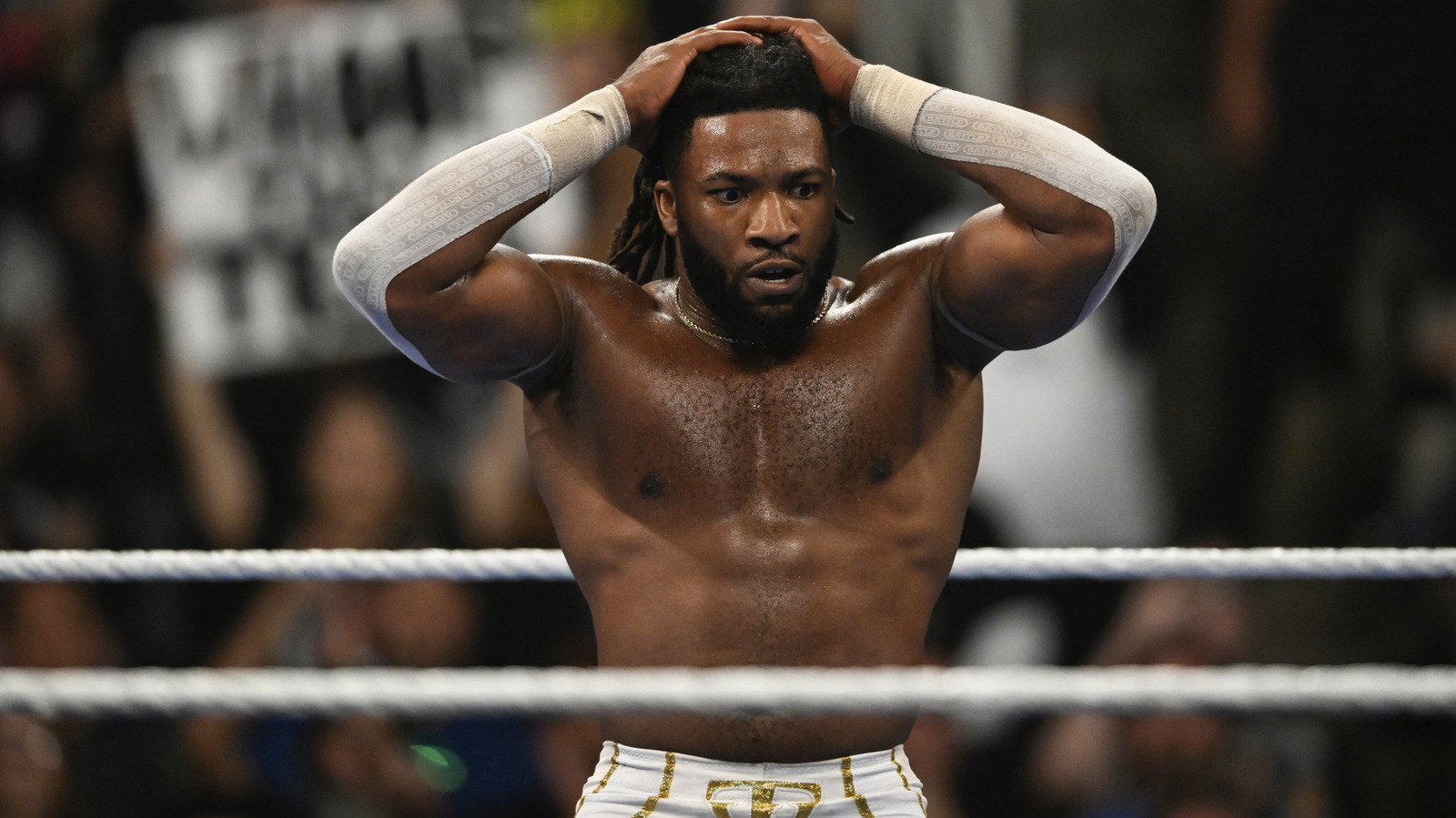
The loudest entrance in the industry
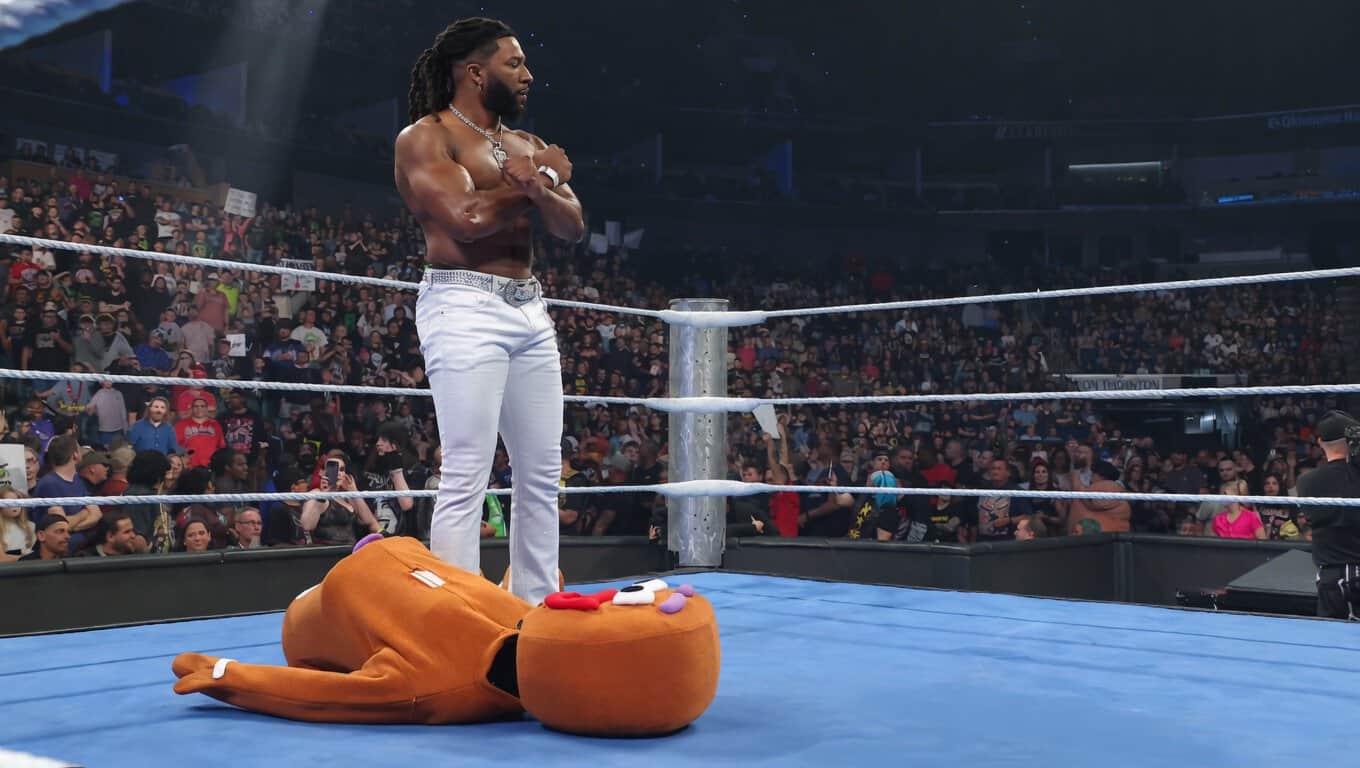
When the opening notes hit, the arena shifts. It happens before he even steps through the curtain. The crowd barks, the energy spikes, and for a few minutes, nobody else in the building matters.
Trick Williams has managed to capture lightning in a bottle. In an era where fans are hyper-analytical and quick to turn on forced pushes, he found a backdoor into their hearts. He didn't do it with five-star technical classics. He did it with pure, unfiltered swagger and a genuine connection.
But the real test is what happens when the bell rings. Entering the ring is the easy part. Sustaining that main-event gravity over a grueling twenty-minute match is a completely different challenge. As he prepares for his next major test inside the ropes, the question isn't whether he belongs at the top of the card. The question is how long he can stay there without fixing the glaring cracks in his foundation.
The audience has anointed him. The office has strapped the rocket to his back. But professional wrestling is a cruel business that eventually exposes every weakness. Right now, Williams is riding a wave of pure emotion. That wave will eventually crash.
Redefining the modern crowd dynamic
The traditional lines between good and evil are completely dead. Wrestling fans in 2026 do not want a hero who tells them to eat their vitamins. They want someone who feels authentic, even if that authenticity comes with a genuinely mean streak.
Williams recently addressed this exact dynamic. When asked if he views his character as a heel or a babyface, he pushed back against the labels entirely. And he is absolutely right to do so. The moment he tries to play a pure, smiling hero, he loses the edge that brought him to the dance in the first place.
Look at his offensive output. It is aggressive, bordering on openly arrogant. He taunts, he plays to the crowd while applying holds, and he routinely disrespects his opponents to their faces. Ten years ago, those were the unmistakable hallmarks of a classic bad guy. Today, they are the exact traits that get a performer universally cheered by a cynical audience.
He understands that the crowd wants to live vicariously through his confidence. They don't want him to be humble. They want him to be undeniably, aggressively sure of himself. He operates in a gray area that feels real.
This refusal to conform to a simple alignment makes him a nightmare to book against. Put a traditional villain against him, and the villain looks cartoonish. Put a pure hero against him, and the hero gets booed out of the building. Williams forces everyone else to adapt to his specific frequency.
Vocal dominance and crowd ownership
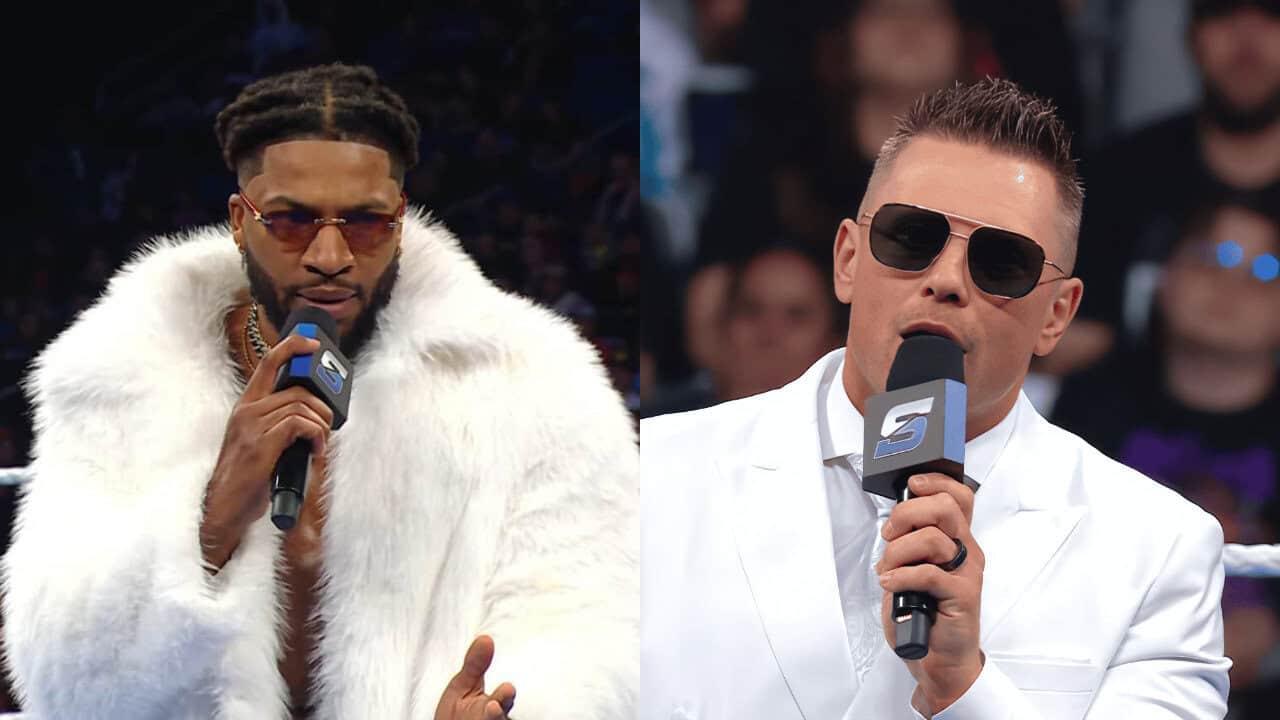
Beyond the physical execution, his vocal cadence is a weapon in itself. He doesn't deliver memorized scripts; he preaches. He finds a rhythm that forces the crowd to clap along, turning a standard in-ring promo into a call-and-response sermon.
This covers up the fact that he rarely says anything of deep substance. If you read a transcript of his promos, they are basic wrestling threats. But when he delivers them, the sheer conviction makes you believe every single word. This oral dominance allows him to win feuds before the bell even rings.
The audience right now is incredibly forgiving. They are willing to overlook a botched suplex or a poorly timed kickout because they feel invested in his personal journey. They watched him stand behind Carmelo Hayes for years, holding the bag, playing the background.
Now that he has stepped into the spotlight, the fans feel ownership over his success. But ownership eventually turns into expectation. Once the honeymoon phase ends, they will demand flawless main event performances. If he cannot deliver them, the same fans barking today will sit on their hands tomorrow.
The Hall of Fame blueprint in action
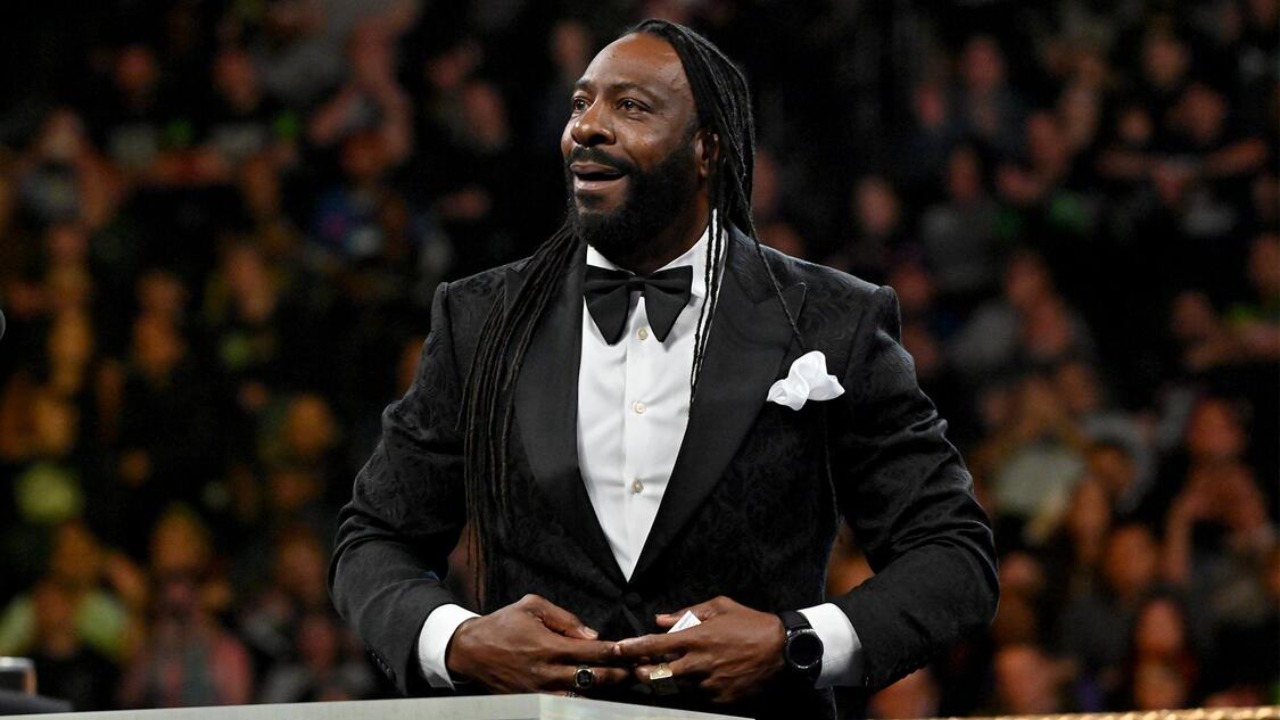
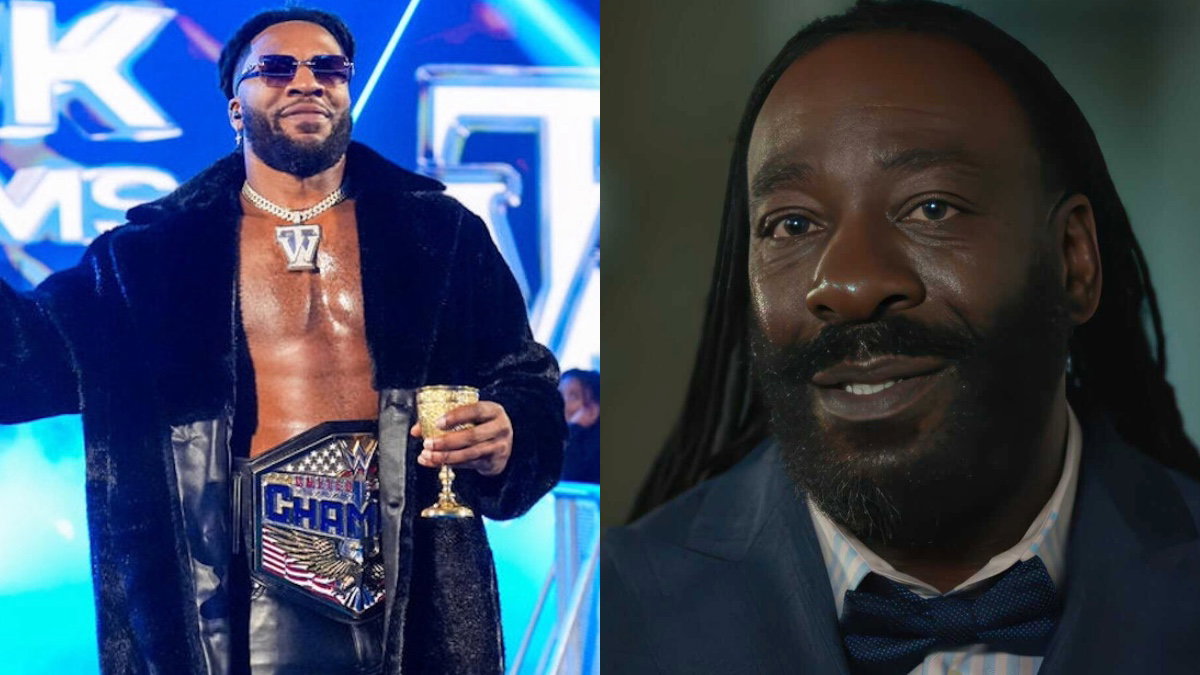
It is impossible to watch Williams right now without seeing the heavy fingerprints of his mentor. Booker T has been highly vocal on commentary, championing him week after week. But the influence goes far deeper than catchy adlibs at the broadcast desk.
Williams has openly discussed how the two-time Hall of Famer has actively guided his career. You can see it in his lateral footwork. You can see it in the way he works the hard camera. Booker T was a master of making every single movement mean something, especially the quiet moments between the high-impact moves.
Booker didn't just teach him how to execute a sequence of strikes. He taught him how to breathe inside the squared circle. When Williams hits a major knee strike and pauses to let the crowd react, that is Booker's psychology at play. It is the veteran understanding that the crowd's reaction is far more important than the move itself.
We are watching a real-time passing of the torch in terms of ring presence. Booker T navigated the murky waters of WCW and WWE by relying on supreme athletic charisma. Williams is attempting to run that exact same playbook.
However, simply mimicking a legend only gets you so far down the road. At some point, the student has to evolve past the teacher. Williams possesses the raw charisma of a prime Booker T, but he does not yet possess the veteran's deep, instinctual understanding of pacing a championship-level bout.
Raw power and unintended consequences
There is a legitimate danger to Williams that absolutely cannot be taught in a sanitized Performance Center environment. He isn't just a former football player trying to memorize spots and learn the ropes. He has a raw, explosive power that sometimes borders on reckless.
He recently shared a story from his childhood that perfectly encapsulates this untamed physicality. While roughhousing with his brother in a makeshift wrestling match, Williams ended up breaking his brother's collarbone. It is a stark, slightly terrifying reminder of the sheer physical force he walks around with.
That unpolished intensity translates directly to his work today. When he hits the ropes, he hits them harder than almost anyone else on the active roster. His strikes do not look safely choreographed; they look like they legitimately hurt. That level of high-impact collision makes his matches incredibly compelling to watch.
It adds an element of genuine unpredictability. You truly believe that he could end a match at any second with a sudden, violent strike. That is a rare commodity in modern professional wrestling, where intricate sequences can sometimes feel overly rehearsed and far too cooperative.
But that same power is a double-edged sword. Wrestling requires you to protect your opponent at all times. A wrestler who operates with that level of raw force is always one mistimed step away from causing a very real injury inside the ring.
The glaring holes in the game plan
We need to be brutally honest about his current in-ring ability. The aura is untouchable. The mechanics? They are hovering around average at best. And that is a massive, looming problem when you are positioned as the face of a brand.
Williams struggles heavily when the pace slows down. If a technical opponent takes him to the mat and strips away the striking game, he looks visibly lost. His transitions between basic wrestling holds are clunky, and he often relies on brute strength to escape rather than utilizing proper technique.
Watch his footwork when he is forced into a chain-wrestling sequence. He takes stutter steps. He hesitates. He waits for the opponent to lead the dance. Against a master technician, he gets exposed immediately. His cardiovascular conditioning also comes into question during grueling main events that push past the 20-minute mark.
He relies heavily on his opponent to dictate the flow and structure of the match. If he is in the ring with a seasoned ring general, the match is fantastic. If he is in there with someone who also needs leading, the bout quickly devolves into a disjointed mess of obvious spot-calling and awkward pauses.
His finishing sequence also requires too much setup time. In a chaotic main event environment, you need a move you can hit out of nowhere. His setup telegraphs the ending far too early, giving the live crowd too much time to cool down before the final impact.
The final verdict and prediction
Williams is the most fascinating development project in the industry right now. He has the one thing you absolutely cannot teach: an undeniable, magnetic connection with the live audience. Every single time he steps through the ropes, the building shakes.
But the hype train is moving significantly faster than his actual developmental progress. He is being thrust into massive main event scenarios while still actively learning the fundamental grammar of a main event match. The mentor guidance from Booker T is invaluable, and his natural aggression covers up a lot of amateur mistakes.
Yet, those mistakes are absolutely still there. The sloppy mat transitions, the lost moments on the canvas, the heavy reliance on the crowd to carry the dead spots in the match. He is getting away with it right now solely because the fans desperately want him to succeed.
My prediction for his next high-stakes outing? He retains his spot at the top of the card for now, but the match will expose those technical flaws on a massive stage. He will secure the victory, likely via a sudden and explosive knee strike, but it will not be pretty. He will survive rather than conquer. And if he doesn't hit the mat and learn how to truly grapple, the crowd's immense patience will eventually wear thin.