Why pacing is the fundamental issue in wrestling television
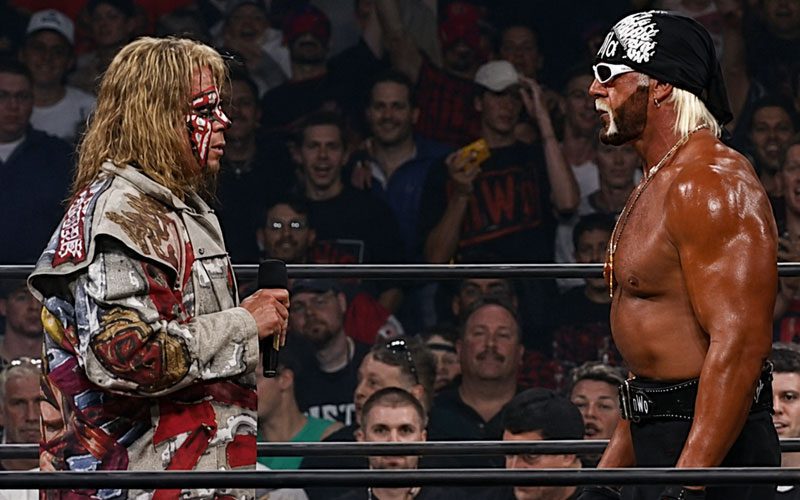
The history of professional wrestling is littered with performers who required guardrails. When Eric Bischoff signed the Ultimate Warrior for a late-90s WCW run, he lacked the disciplinary framework to manage a performer known for sensory overload. The resulting 17-minute debut promo remains a cautionary example of what happens when a promoter mistakes star power for structured television.
Television wrestling relies on a clock. Every segment occupies a specific slot in a two- or three-hour block, and when a talent fails to internalize those constraints, the structural integrity of the broadcast falters. The 1998 debut was not just a technical failure; it was a production catastrophe that leaked into every subsequent segment of the show.
The logic of the 17-minute vacuum
A 17-minute promo segment is an outlier in modern booking. It requires a singular narrative tension that keeps an audience engaged while pacing their physical reaction. The Ultimate Warrior’s WCW debut lacked the kinetic movement necessary to justify such a massive time investment. Without an active opponent in the ring to initiate contact or create physical stakes, the promo became an isolated vacuum.
Successful wrestling promos usually hinge on the 'three-act' structure: the hook, the escalation of hostility, and the exit. Here, the energy profile was flat. By the 12-minute mark, the audience response had shifted from anticipation to visible fatigue. The lack of editing or producer intervention during this window signaled a massive breakdown in WCW’s backstage leadership.
The consequences of unchecked ego
When talents are given total creative control over airtime, they rarely choose brevity. The vanity of the 17-minute monologue sucked the momentum out of the entire Monday Night War effort that evening. It proved a cynical point about WCW: the company prioritised the shock value of a name over the logic of a coherent broadcast.
Critics often point to the high production costs or the massive contracts involved in that period, but the wasted minutes were the real deficit. A viewer flipping channels at the 15-minute point of an unchanging, static frame of a wrestler talking lacks any incentive to commit to the remaining duration of the broadcast. It was a failure of spatial management that modern promotions still struggle to avoid when granting long-form creative agency to legends.
My prediction for the retrospective analysis
The WCW experiment with the Warrior should be studied as a failure of administrative oversight rather than a failure of the performer alone. Promoters who allow 17-minute promotional windows without specific, actionable beats are effectively paying to lose viewers. My analytical view? Any segment exceeding 8 minutes should be treated as a major risk to average minute audience retention. WCW in 1998 proved exactly why that threshold exists.