The Subterranean Spacing of East 14th Street
Professional wrestling usually demands distance. You watch from row twenty, squinting at the sweat flying off a chop, or you view it through a polished television lens. Tonight, that distance evaporates entirely.
Shane Hartline is bringing his Nearly Average Wrestling brand to the Upright Citizens Brigade Theatre in Manhattan. The showcase, titled NAW or Never, presents a logistical puzzle that would terrify most traditional promoters. There is no ring, no canvas, and no protective barrier separating the crowd from the physical action.
Instead, performers must navigate a cramped basement stage on East 14th Street where the front row sits less than three feet away. According to reports from PWInsider, AEW star Max Caster and ECW icon Tommy Dreamer are both booked for this experimental card on May 23, 2026. It represents a fascinating collision of old-school brawling, modern television character work, and high-risk performance art.
A standard WWE ring measures twenty feet by twenty feet, providing four hundred square feet of canvas. The UCB Mainstage is less than half that size and lacks any ropes to define the boundary. This compression completely changes the defensive posture of every wrestler who steps onto the boards.
Normally, a ringside area is covered in two-inch thick protective foam mats to absorb impact. At UCB, the wooden floor is laid directly over a concrete slab. A single misjudged fall can lead to severe contusions or structural injuries.
The 60-Second Promo Clock and the Pacing Challenge
The core mechanic of NAW or Never is the bucket format, where performers put their names in a draw and get exactly 60 seconds on the microphone. If they fail to impress, they are ushered off the stage by Hartline's crew. If they succeed, they earn a developmental contract for the NAW roster.
This strict time limit completely shifts the tactical approach to a wrestling promo. On national television, wrestlers are frequently granted ten to fifteen minutes to meander through scripted monologues that suffer from bloated pacing. In this comedy basement, every second is a precious commodity that cannot be wasted on filler.
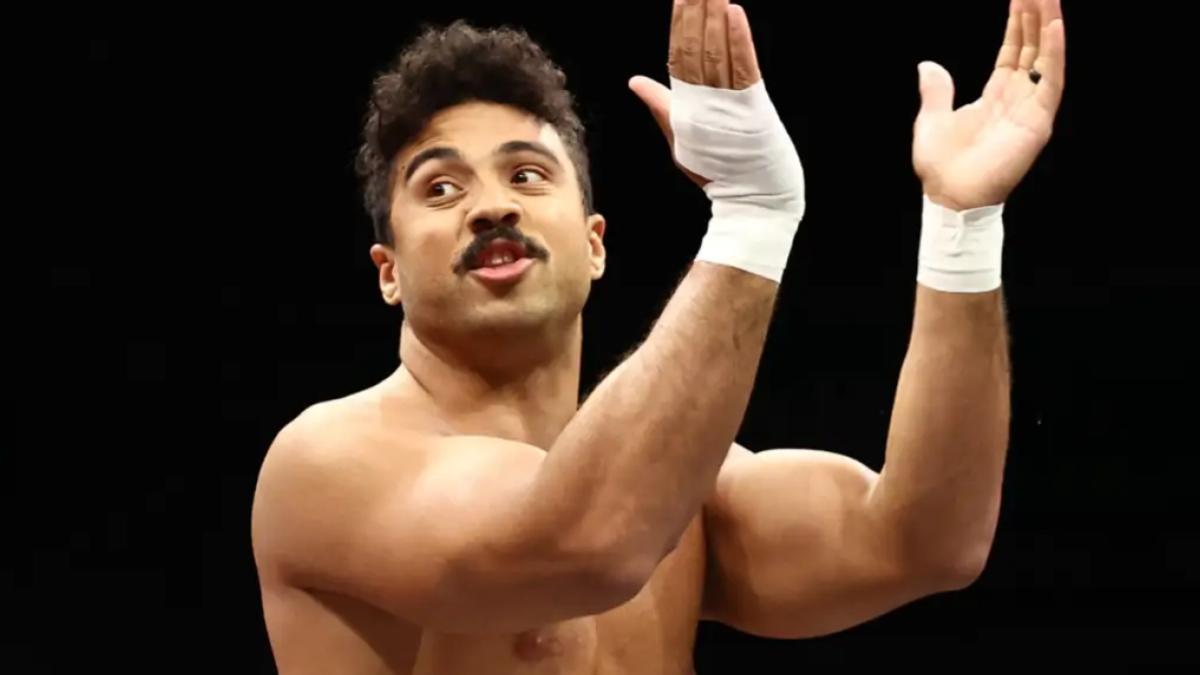
Max Caster is uniquely equipped for this fast-paced environment. His entire gimmick in The Acclaimed is built on punchy, eight-bar freestyle raps delivered during his entrance. Because his average television rap lasts roughly forty-five seconds, the NAW clock aligns perfectly with his established cadence.
However, Caster will have to adjust his physical projection. In a massive arena, Caster projects his voice upward toward the rafters and keeps his eyes locked on the hard camera. In the UCB basement, he will be looking directly into the eyes of individual comedy fans where a single slipped syllable will be immediately obvious.
The audience in a comedy club reacts to different cues than a wrestling crowd. Wrestling fans look for physical presence, facial expressions, and high-energy catchphrases. Comedy fans demand sharp, logical consistency and quick verbal payoffs.
Behind the marquee names of Caster and Dreamer, the show's success hinges on the NAW regular roster. Performers like Peter Murphy, Ben Kaplan, and Leroy Patterson provide the comedy framework. Patterson, in particular, is a chaotic element who uses high-energy physical stunts to get a laugh.
The tactical danger here is the mismatch in timing. Professional wrestlers work with a physical rhythm based on three-second referee counts and crowd heat cycles, whereas comedians work on verbal beats. When these two distinct performance styles clash on the same stage, the timing can easily derail.
If Hartline's bucket draw yields a series of flat, uninspired promos from amateur performers, the show's momentum will die. The crowd at UCB is notoriously sharp and quick to turn on performers who display weak character work. Unlike a typical wrestling crowd that will chant through a boring segment, a comedy crowd will simply respond with dead silence.
Shane Hartline's background in both improv comedy and wrestling is the glue that holds this concept together. He knows how to bridge the gap between a wrestler's physical timing and a comedian's verbal pacing. However, he is entirely at the mercy of the bucket draw.
If three amateur comedians are drawn in a row, the show's energy will plummet. A cold crowd is incredibly difficult to warm up, especially in a small room. The pacing must be kept rapid-fire to prevent the audience from tuning out.
The Logistics of a Cross-Country Fly-In
The scheduling behind Caster's appearance tonight is incredibly tight. The UCB show in New York starts late on Saturday night, while AEW's annual Double or Nothing pay-per-view takes place tomorrow on May 24, 2026, in Las Vegas. That means Caster must perform his set, rush to the airport, and board a six-hour flight to Nevada.
This cross-country dash introduces a massive physical variable because red-eye flights are notorious for causing muscle stiffness. For an athlete who relies on explosive leg drive for his top-rope diving elbow drop, spending six hours in a pressurized cabin is the worst possible preparation. This suggests Caster will keep his physical exertion tonight to an absolute minimum.
We should expect Caster to rely entirely on his mouth rather than his muscles. He cannot risk a freak ankle injury on a hardwood stage when he has a high-profile match scheduled less than twenty-four hours later. This scheduling reality will force him to anchor himself in the center of the performance area, using slow lateral pivots rather than explosive footwork.
Sitting in a pressurized cabin for six hours causes the body to retain water, leading to joint stiffness. Caster will be flying through multiple time zones, which disrupts the body's natural circadian rhythm. This sleep deprivation can slow reaction times by up to fifteen percent.
AEW Double or Nothing is one of the promotion's core pay-per-view events. The financial and creative stakes are incredibly high for Caster and The Acclaimed. Risking that spot for a comedy show in Manhattan shows a surprising level of booking audacity, yet the advertised appearances confirmed by PWInsider prove that both veterans are fully committed to this bizarre experiment.
The Danger of the Brick-Wall Brawl and the Tactical Verdict
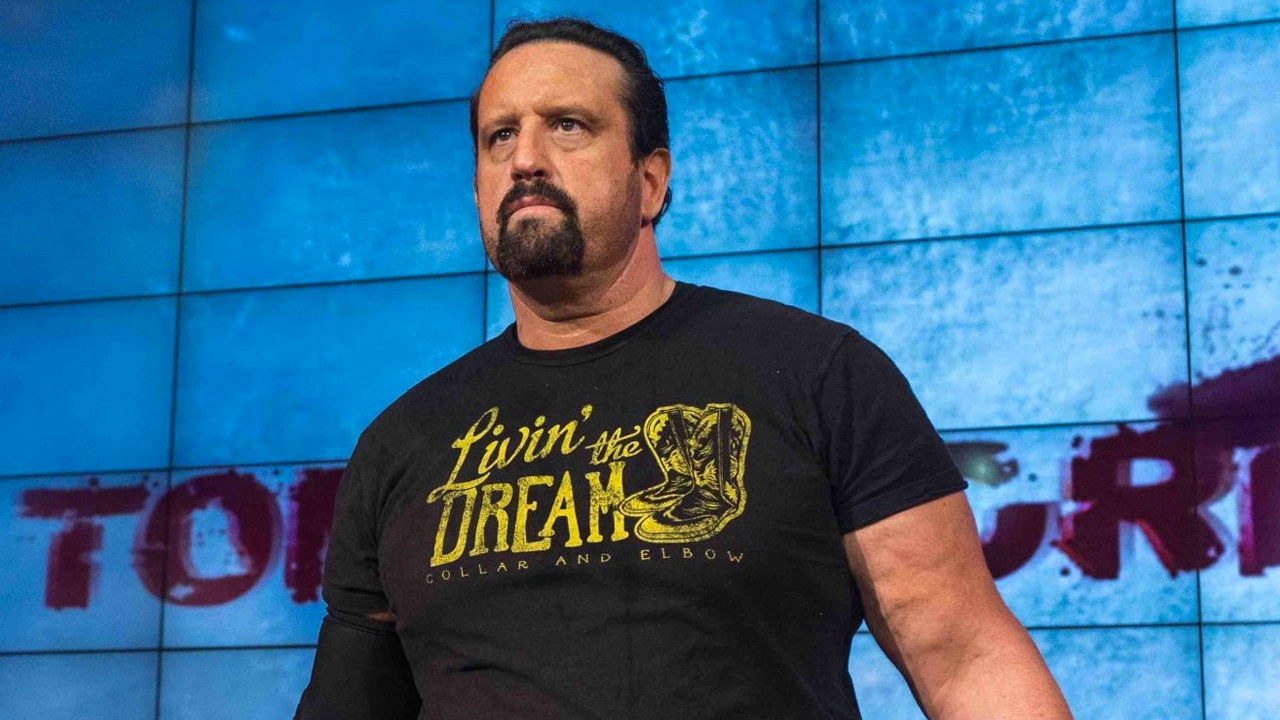
While Caster has the youth and agility to protect himself, Tommy Dreamer represents a far more volatile tactical equation. The fifty-five-year-old veteran has built his entire legacy on high-impact brawling and hardcore spots. He is the ultimate physical storyteller, but his body has paid a massive price over three decades of action.
Dreamer's physical mobility is severely compromised. His knees are heavily wrapped and he relies on heavy, flat-footed positioning to maintain his balance. Because those structural aids do not exist at the UCB Theatre, his movement patterns will be extremely restricted.
This is where the booking choice becomes highly questionable. Putting an aging hardcore wrestler in a tight, unpadded room with a low ceiling is a recipe for physical disaster. If Dreamer tries to swing a kendo stick, the low clearance will limit him to horizontal sweeps that risk hitting a stage light.
Furthermore, the lack of protective mats means any physical bump will be taken directly on the hardwood floor. Dreamer has taken thousands of bumps, but doing so on unyielding wood without a ring's spring-loaded support is unnecessary punishment. It is highly likely that any physical action involving Dreamer will be restricted to safe, theatrical strikes rather than actual wrestling maneuvers.
Dreamer's signature brawling style relies on using the environment to create dramatic tension. He normally throws opponents into steel barricades or uses folding chairs to generate loud, satisfying pops. In a small basement theater, these weapons become liabilities.
If a steel chair is thrown in a room this small, the ricochet could easily strike a fan. The lack of physical barriers between the stage and the front row makes traditional hardcore wrestling impossible. Any physical spot must be executed with absolute, micro-surgical precision.
Despite the obvious risks, tonight's show offers a rare look at professional wrestling stripped of its massive production values. The lack of pyrotechnics, video screens, and massive sound systems forces the performers to rely solely on their fundamental skills. It is a true test of character projection and raw charisma.
Caster will easily command the room. His ability to read a crowd and deliver rapid-fire topical punchlines is unmatched in modern wrestling. Because he needs to protect himself for his flight to Las Vegas, he will likely keep his physical involvement limited to a verbal confrontation.
The real surprise will be Tommy Dreamer's role. Instead of wrestling a standard match, Dreamer will act as the ultimate physical foil for an overzealous comedy heel. When a performer refuses to leave the stage after their sixty seconds expire, Dreamer will make a surprise entrance from the back of the room to a massive ovation.
He will deliver a single, safe, yet highly satisfying Tommy Dreamer DDT on the hardwood floor to clear the stage. The crowd will erupt, the clock will strike zero, and NAW will once again prove that wrestling doesn't need a million-dollar budget to captivate a room. My money is on Caster walking away with the loudest pop of the night, while Dreamer provides the physical punctuation mark that leaves the crowd satisfied.
Ultimately, this show represents a return to the roots of wrestling. Before the million-dollar television deals, wrestling was a traveling roadshow performed in barns and small halls. Tonight, Caster and Dreamer will strip away the excess and show what makes wrestling work at its core.
Read Next
- Why the Ringside Memorial Day sale is the final chapter of the AEW Jazwares era
- Why Bandido's rebuilt wrist is the ultimate wildcard at Double or Nothing
- Tony Khan is scrambling to save Double or Nothing from a week of chaos
- Why Ted Turner and Vince McMahon still define the wrestling booking chess board