The Crossover Credibility of a 151-Second Blowout
During a two-and-a-half-year WWE developmental run that reportedly cost millions and yielded exactly zero main roster matches, Gable Steveson looked like a man trying to speak a foreign language. Yesterday at UFC 329, it took the Olympic freestyle gold medalist just 151 seconds to prove where his natural vocabulary lies. He dismantled heavyweight Elisha Ellison, securing a TKO victory at 2:31 of the first round in a display of pure wrestling dominance.
Yet it was Steveson’s post-fight remarks to Nina Drama that ignited a different debate. When asked to choose which crossover star would have a more successful transition, Steveson did not hesitate to back the WWE's top female athlete over the UFC's biggest drawing card.
“Rhea Ripley in MMA.”
This was not a casual throwaway line. As Ringside News reported, Steveson based his assessment on Ripley's raw physical traits and elite strength. The statement challenges the common assumption that professional wrestling is an easy retirement home for aging fighters.
Steveson knows both sides of this equation better than almost anyone. He signed with WWE in September 2021 with massive fanfare, yet wrestled only one televised match—a double countout against Baron Corbin in July 2023—before being released in May 2024. His failure to adapt to the theatrical choreography of the ring, contrasted with his immediate success in the cage, reveals the massive gulf between combat sports and sports entertainment.
The Mechanical Breakdown of Conor McGregor
The standard argument suggests that Conor McGregor is a natural fit for WWE. He has spent a decade cutting high-energy promos and drawing massive pay-per-view gates. However, professional wrestling is a collaborative sport requiring athletes to protect their opponents during high-impact stunts.
McGregor's body is no longer built for that level of cooperation. His physical breakdown has become the defining feature of his late career.
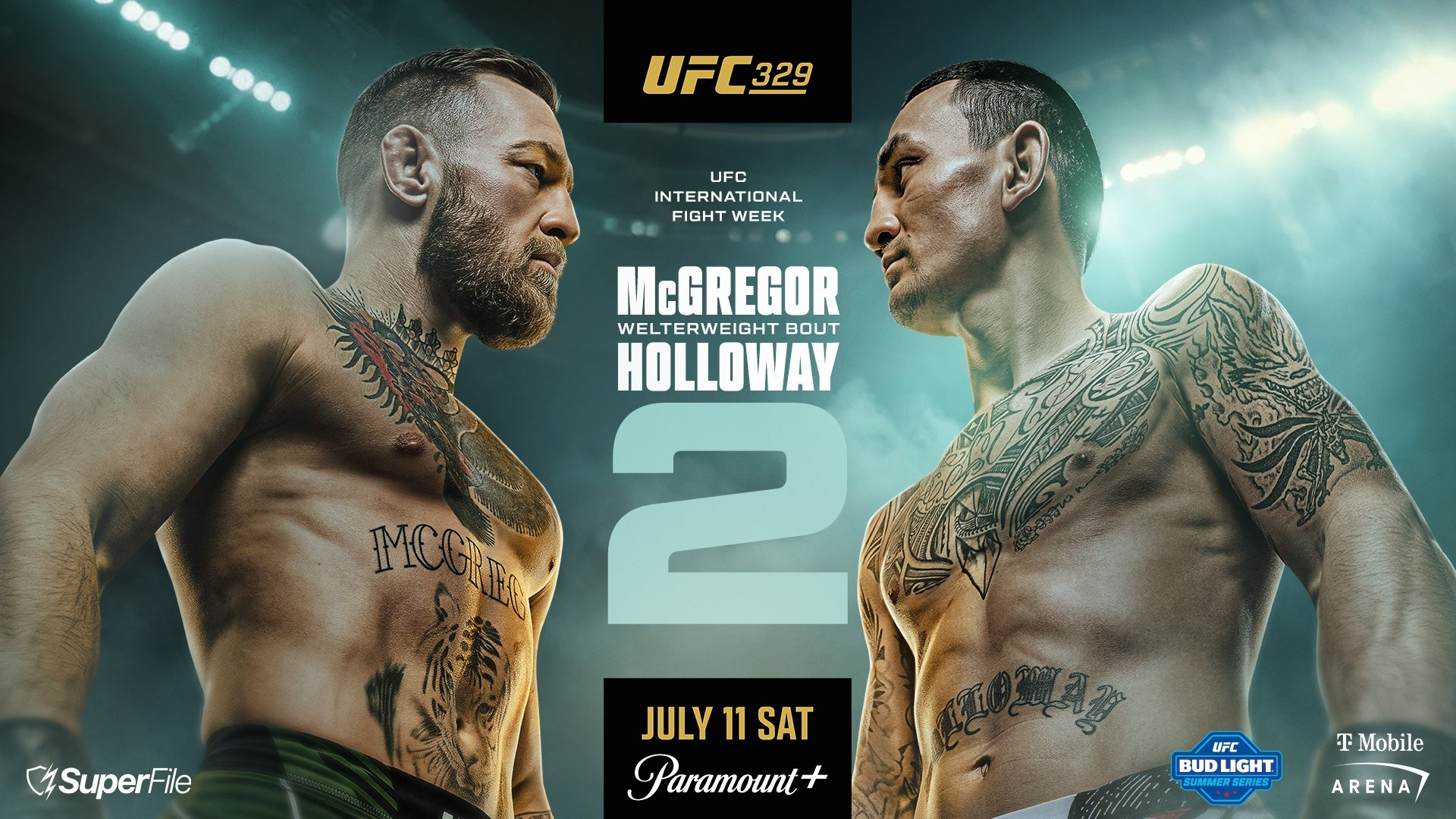
Look at the metrics of his recent performances. At UFC 329 yesterday, McGregor's highly anticipated return to the octagon lasted just 1:09. He threw a flying left roundhouse kick, blew out his right knee, and was stopped by referee Mike Beltran.
The sudden stoppage ended his long-awaited comeback before it even began. The defeat officially dropped his professional MMA record to 22-7.
The 10-Year Slide
More revealing is his trajectory over the past decade. Since defeating Eddie Alvarez at UFC 205 in November 2016, McGregor has fought only five times in the octagon. He has compiled a dismal 1-4 record across those rare appearances.
His skeletal frame has repeatedly failed under pressure. His previous major injury, a fractured tibia and fibula in July 2021, sidelined him for exactly five years prior to yesterday's disaster.
The Mechanics of Cooperation
At age 37, McGregor lacks the structural durability required for the WWE schedule. Professional wrestling requires performers to absorb the impact of the mat, run the ropes, and safely catch 250-pound athletes flying off the turnbuckle.
A fighter who cannot survive 70 seconds of active competition without blowing a knee joint cannot survive the nightly toll of a WWE ring. The cooperation required in pro wrestling makes it far more hazardous for a fragile athlete than a real fight where you control your own stance.
Rhea Ripley's Raw Physical Blueprint
Conversely, Rhea Ripley possesses the physical toolkit that translates directly to legitimate combat. At 29 years old, she is in her absolute athletic prime. She stands 5 feet 8 inches tall and carries 170 pounds of dense, functional muscle.
She is not a fitness model playing a character. Ripley is a heavy-duty athlete who has spent years dominating the WWE main roster through sheer physical power.
The 380-Day Work Rate
Consider Ripley's in-ring work rate. During her first Women's World Championship reign, which lasted 380 days from April 2023 to April 2024, she defended her title against the most physical competitors on the roster. She vacated that title only due to an accidental shoulder injury, maintaining a WWE career win rate between 61% and 67% across over 500 total matches.
The Grip Strength Metric
Ripley's raw power is backed by measurable data. In a viral grip strength test conducted during a promotional crossover event, she registered a score of 125.8 pounds on a digital dynamometer.
For context, the average female grip strength ranges between 60 and 70 pounds, while the average male scores around 90 to 100 pounds. Ripley's grip strength is elite even when measured against professional male athletes, comfortably exceeding average male baselines.
This physical base is what makes Steveson's claim so plausible. In MMA, particularly in the women's featherweight division, raw strength and a powerful clinch can neutralize technical striking. Ripley has the skeletal alignment and power to execute double-leg takedowns and control opponents against the fence.
Unlike McGregor, whose joints are failing him, Ripley's body is structurally sound. Her frame is engineered to endure the grueling conditioning of a professional training camp.
The Illusion of the Promo and the Reality of the Mat
The crossover success of Brock Lesnar and Ronda Rousey created a template for these transitions. Both athletes succeeded because they possessed elite amateur wrestling or judo backgrounds that allowed them to execute throws and protect their bodies. McGregor has no such background.
He is a pure counter-striker who relies on spatial awareness and fast reflexes. These two attributes deteriorate rapidly with age, ring rust, and joint damage.
If McGregor entered WWE, his lack of amateur grappling pedigree would expose him. He cannot easily lift or carry larger opponents, nor does he have the hips to execute safe suplexes. He would be entirely dependent on his opponents doing the heavy lifting to make him look credible.
In contrast, Ripley already trains in functional grappling daily. She deeply understands the mechanics of weight distribution, balance, and directional force.
This leads to a counterintuitive conclusion. Fans assume McGregor is a natural WWE fit because he can talk, while Ripley is locked into professional wrestling. But the microphone does not save your spine when you take a powerbomb from a heavyweight.
Ripley's physical prime and elite strength would give her an immediate foundation in a lower-tier MMA division. Conversely, McGregor's structural breakdown makes him an absolute liability in a WWE ring.
Steveson's analysis is correct. The transition from the script to the cage is a test of raw durability and power. The transition from the cage to the script is a test of cooperation and mechanical execution.
At this stage in their respective careers, Ripley has the physical capital to survive a real fight. McGregor no longer has the knees to survive a fake one.