The Stalled Lucha Revolution
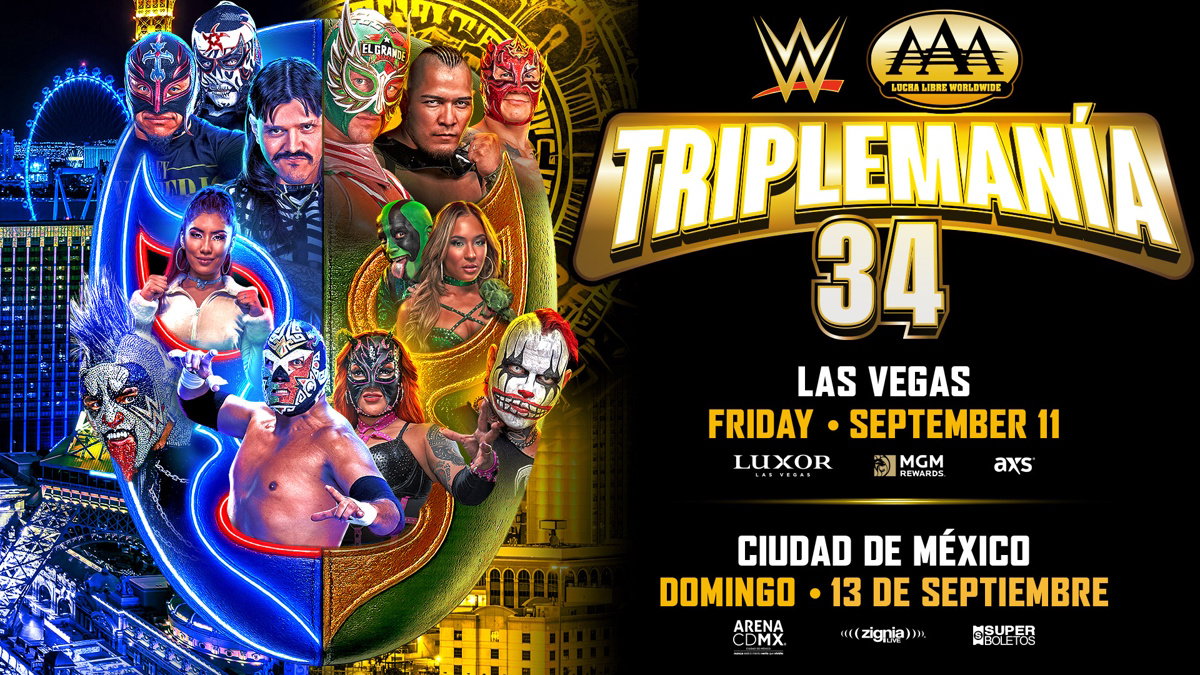
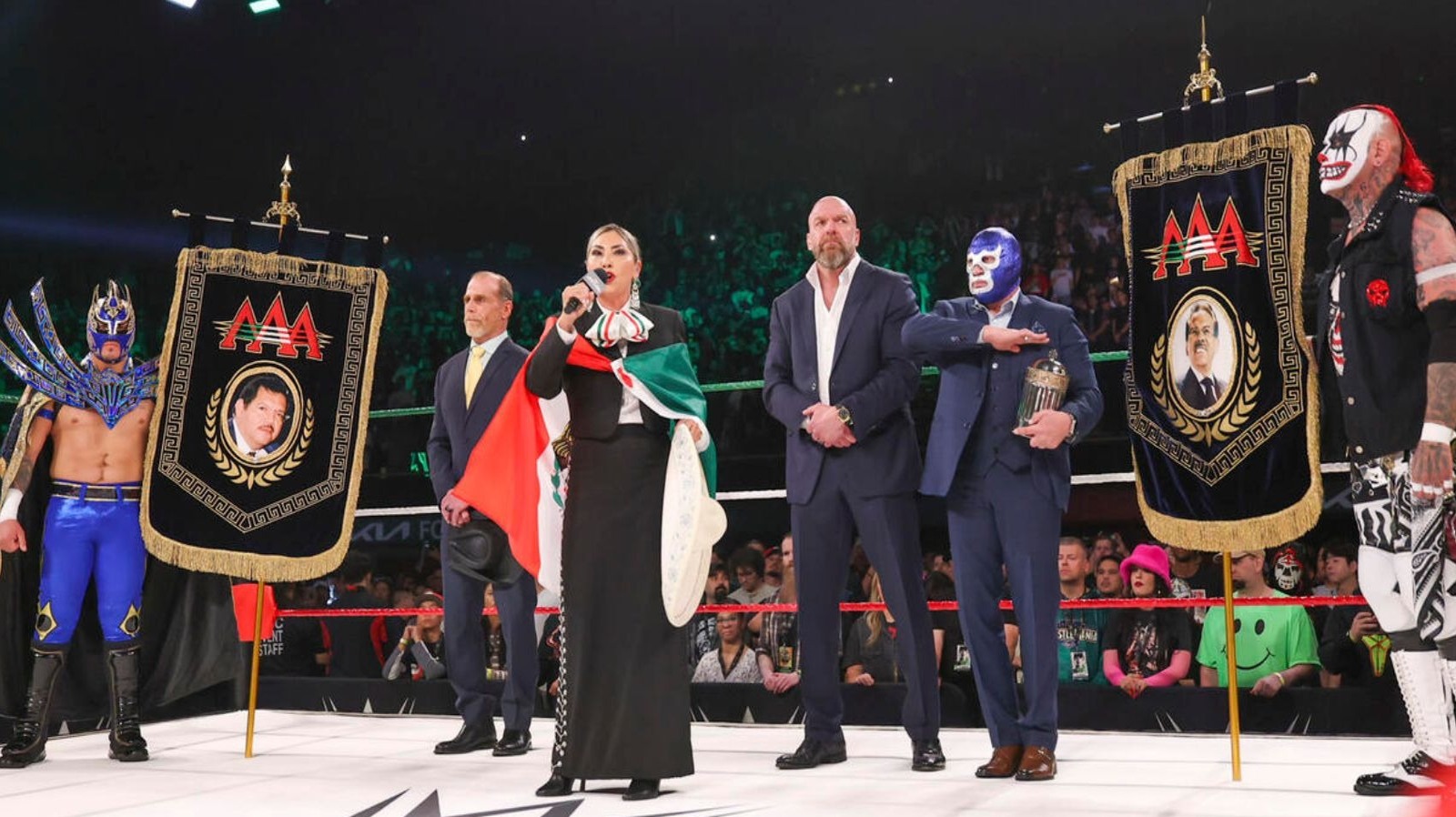
When the ink dried on WWE's acquisition of Lucha Libre AAA Worldwide last year, the sheer scale of the move masked the logistical nightmare waiting underneath. It was a massive corporate play designed to shock the industry. It handed WWE the keys to the most chaotic, historically significant promotion in modern Mexico.
The projections were immediately massive. Fans imagined immediate crossover bouts, fresh blood in stagnant divisions, and a huge surge in Latin American viewership.
But boardroom theories rarely translate smoothly to the squared circle. Over a year later, the grand experiment is audibly sputtering.
Dave Meltzer noted recently on Wrestling Observer Radio that WWE has fundamentally failed to hit its initial goals following the AAA buyout. While the precise internal targets remain locked behind Stamford's closed doors, anyone breaking down the weekly television product can identify the glaring shortfalls. This hasn't been a disastrous failure, but it is falling far short of the integration we were promised.
The Collision of Ring Philosophies
To understand why this merger is dragging, you have to break down the mechanics of the actual wrestling. WWE is a machine built on strict formatting. Matches are constructed around television commercial breaks, meticulously planned high spots, and a heavy emphasis on working the hard camera. Every movement is calculated for the global feed. The wrestlers are taught to slow down and let the audience digest the action.
AAA is the exact opposite. It thrives on organized chaos.
Lucha libre relies on fluid improvisation, rapid-fire multi-man sequences, and an elasticity to the rules that allows matches to spill into the crowd at a moment's notice. The refereeing in AAA is notoriously theatrical. The official often serves as a plot device rather than a strict enforcer of the rules. The entire rhythm of a Lucha match is designed to keep the crowd in a state of perpetual frenzy, building to a crescendo rather than stopping and starting.
Forcing AAA's frantic, kinetic energy into WWE's rigid, over-produced framework has resulted in a glaring stylistic clash. We have watched it play out awkwardly on Monday nights.
When traditional luchadors are forced to slow their pace to accommodate WWE's typical rest holds and prolonged heat segments, the matches lose their identity. The transitions become jarring. A wrestler used to hitting a rapid-fire sequence of arm drags and springboards suddenly looks hesitant. They are clearly thinking about hitting their designated television time cues instead of just wrestling.
A Booking Strategy Running on Empty
The handling of the inherited roster has been borderline negligent. A smart booking committee would have treated the AAA locker room as a disruptive, unpredictable invading force. The narrative practically builds itself: the wild, unfiltered luchadors rejecting the sanitized, corporate environment of WWE.
Instead, the creative team has slowly, quietly filtered the Mexican stars into lower-midcard purgatory. We are seeing incredible generational talents essentially treated like rookies. They are handed generic entrance music and told to walk to the ring with zero backstory, expecting the audience to simply react to their masks.
As we close in on WWE Backlash this weekend, the absence of a meaningful AAA storyline is staggering. Backlash is traditionally the testing ground for the rest of the calendar year. It is the event where the post-WrestleMania dust settles and the summer angles are launched. Yet, the AAA contingent feels completely marginalized on the card.
Where is the marquee inter-promotional clash? Where is the chaotic, 30-minute trios match that should be tearing the house down before the main event? Instead, the imported talent is being used in disjointed, three-minute sprint matches that do nothing to establish their characters. They are being utilized as colorful filler between prolonged Bloodline monologues and Cody Rhodes video packages.
It is a frustrating waste of resources. You do not buy a massive promotion just to strip away everything that made it popular in the first place.
The Hidden Television Hurdles
The problems extend far beyond the booking sheet. WWE's initial goal almost certainly revolved around media rights. Acquiring AAA was supposed to be a turnkey solution to dominate the Spanish-speaking market. They wanted an instant pipeline to massive regional television and streaming revenue across Latin America.
The reality of international media rights is a tangled, hostile web. AAA possessed existing, deeply complicated broadcasting agreements that did not simply vanish when WWE assumed ownership. Networks in Mexico do not simply tear up lucrative broadcast contracts because an American company signed a check.
Untangling those regional contracts, renegotiating distribution rights, and trying to align AAA's chaotic event schedule with WWE's immaculate global calendar has reportedly been an absolute nightmare for the legal department.
This is likely the core of Meltzer's report. If the corporate expectation was a sudden, massive revenue spike from the Mexican television market, the slow, agonizing reality of contract law and pre-existing obligations has stalled their momentum. They bought the brand, but they have struggled to monetize the actual distribution.
The Performance Center Disconnect
Then there is the talent pipeline. The acquisition gave WWE immediate access to some of the most innovative and fearless high-flyers alive today. But trying to filter these veterans through the WWE system has exposed a major flaw in how the company trains talent.
The WWE Performance Center teaches a highly specific, standardized style of professional wrestling. It emphasizes left-sided bumping, specific rope-running techniques, and a heavy reliance on verbal communication in the ring.
Many of the AAA stars have spent fifteen years mastering a completely different physical language. Lucha libre bases are different. The bumping mechanics are different. The entire spatial awareness required for their complex multi-man spots directly contradicts WWE's isolation-heavy tag team formulas.
Forcing thirty-year-old veterans to unlearn their entire mechanical foundation to fit the "WWE style" is creating a hesitant, watered-down product. We are watching elite, world-class athletes look suddenly clumsy because they are overthinking their footwork. The hesitation is visible on screen. The magic is being aggressively coached out of them.
The Locker Room Politics
We also have to consider the very real human element of this merger. WWE's locker room has a defined hierarchy. It is a highly competitive environment where television time is the most valuable currency. Suddenly dropping two dozen established AAA stars into that locker room creates instant friction.
You have WWE mainstays who have spent years waiting for a push suddenly competing for minutes with international stars they have never worked with. The resentment is a natural byproduct of poor management. If the front office does not clearly define the roles and goals of the AAA roster, the native WWE talent will naturally view them as a threat rather than an asset.
This lack of communication bleeds into the actual matches. Trust is the foundation of professional wrestling. When you throw two strangers into the ring who speak different wrestling languages, the lack of trust results in sloppy execution. They are protecting themselves rather than working together to build a compelling match.
Historical Echoes and the WCW Warning
We have seen this movie before, and the ending is rarely pretty. In the late 1990s, World Championship Wrestling imported an incredible array of luchadors to anchor their cruiserweight division.
While the matches were often spectacular, the talent was never allowed to break the glass ceiling. They were treated as an opening act. They were merely a shiny distraction before the main event heavyweights took the ring. WCW never bothered to translate the rich history of the masks, the rivalries, or the honor system of Lucha Libre. They just wanted guys who could do flips to pop the crowd at 8:00 PM.
WWE is currently repeating those exact mistakes, but on a much larger scale. By sanitizing the AAA product and stripping away the cultural authenticity, they are alienating the hardcore lucha fanbase. Simultaneously, they are failing to get the casual WWE audience invested.
The insistence on uniformity is the enemy of great wrestling. If every match looks the same, if every wrestler works the exact same pace, the product flatlines. AAA was supposed to be the injection of adrenaline WWE desperately needed. Instead, WWE has sedated the patient.
The Only Viable Pivot
The current trajectory is entirely unsustainable. WWE cannot keep treating the AAA acquisition as an awkward side project. The frustration within the fanbase is growing, and if the internal goals are already being missed, the corporate patience will soon run thin.
My prediction is stark: WWE will be forced to drastically restructure the entire AAA integration before the end of the year. The sanitized, hybrid approach is a confirmed failure. They cannot keep trying to force a square peg into a round hole while their biggest acquisition rots on the vine.
They have to grant AAA true operational autonomy. They need to launch a dedicated, standalone programming block that operates outside the typical WWE production bubble.
Let them use different camera setups. Let them book the wild, violent brawls that defined the promotion. Let it feel gritty, unpredictable, and distinct.
If WWE continues to micromanage the wrestling mechanics of Lucha Libre, they will continue to bleed momentum. The acquisition will go down in history as a bloated, expensive mistake. The talent is simply too good to waste on the kickoff show. WWE has the best roster in the world right now — it is time they actually let them fight.