The American Nightmare is mapping out the future
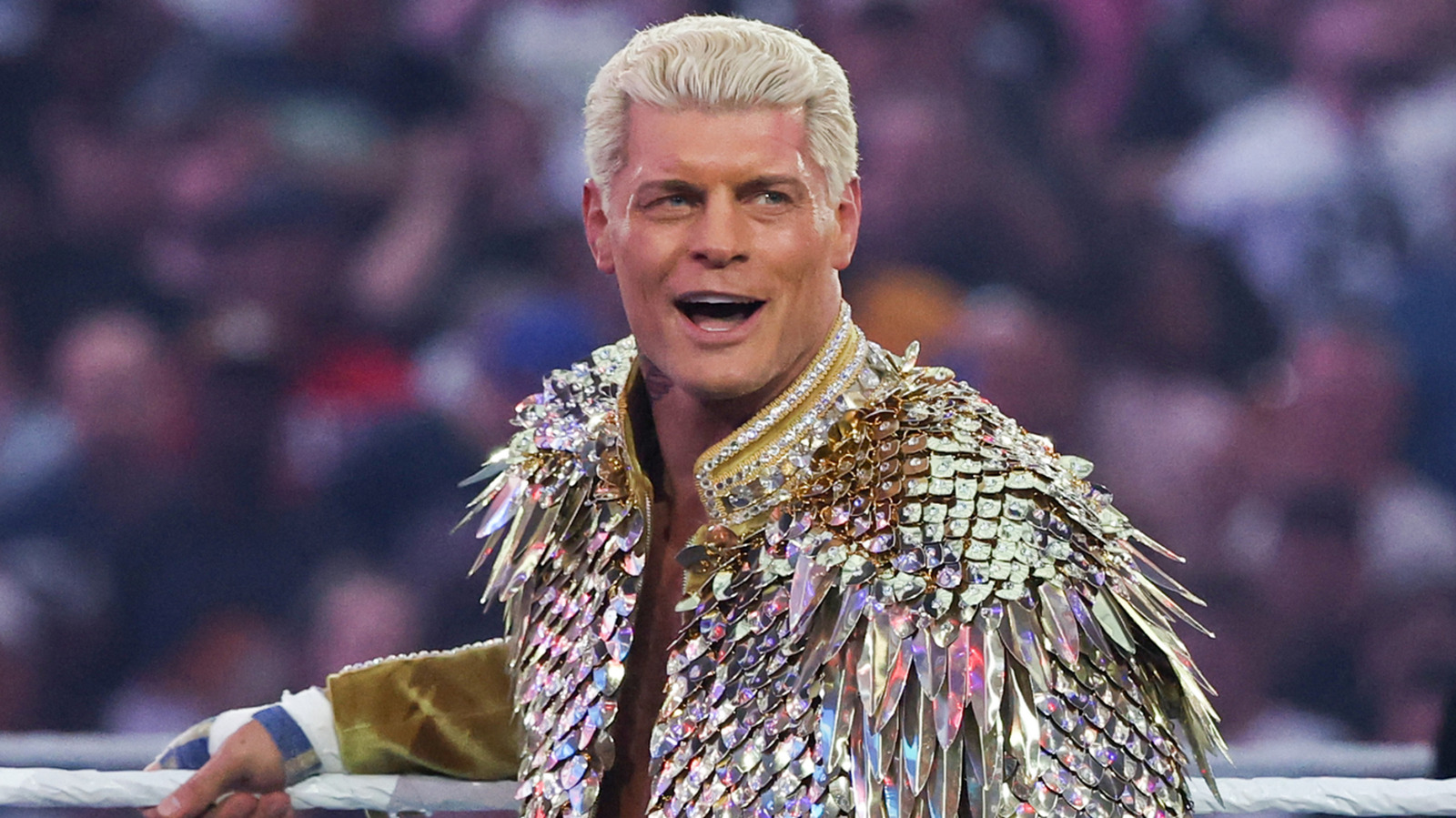
Cody Rhodes just pulled back the curtain on how he views the creative engine room in WWE. While we are all busy yelling at our TVs about finish sequences, Cody is essentially treating the booking sheet like a game of backgammon. He recently broke down the distinct mentalities of Triple H and Paul Heyman, revealing exactly how the sausage gets made in Stamford.
Triple H is the guy who looks at the marathon, not the sprint. Cody notes that the current Head of Creative is constantly obsessed with the long-term payoff, which explains why we sit through months of slow-burn storytelling for one single pop. It’s methodical, it’s polished, and it’s arguably the most stable the product has felt in two decades.
Then you have Paul Heyman. If Hunter is the architect with steady hands, Heyman is the guy who sets the house on fire just to see which chairs burn the fastest. Cody highlights that Heyman’s approach is rooted in the high-stakes psychology that defined his run in ECW and his later work with Brock Lesnar. It is pure chaos theory applied to a wrestling ring.
The Rhodes paradox
Here is where things get messy: Cody is stuck right in the middle of these two philosophies. He is the guy who needs to deliver the classic, babyface-championship-run narrative, but he is doing it for a company that values Heyman’s brand of unpredictable, high-drama antagonism. It is a tightrope walk that makes his recent bouts, like the creative breakdown sessions he describes, look like a chess match.
We have to look at the downsides here, too. Sometimes, this obsession with the process turns the actual in-ring product into a total drag. When you have two geniuses arguing over the arc of a story, the mid-card matches suffer. We spend so much energy worrying about whether the story makes sense that a perfectly good 15-minute TV match gets completely lost in the shuffle.
Cody admitted that navigating these voices is a full-time job of its own. It is easy to look at the guy in the suit and the guy on the microphone as conflicting forces, but in reality, they are two sides of the same golden coin. If the balance tips too far toward the cinematic narrative, we get segments that feel like a fever dream. If it tips too far toward the gritty, old-school booking, we get stale repetitions of the same tired tropes.
What this means for the main event
If you are wondering why the current era of WWE feels so different from the Vince McMahon days, look no further than these creative input sessions. The modern product is a collaborative effort, which sounds great in a boardroom, but it often leads to a dilution of the characters. Nobody is allowed to just be a monster anymore because they have to play into the overarching philosophical themes pushed by management.
We are watching a shift in how professional wrestling is consumed. It is no longer enough to just watch the match. You have to understand the backstage dynamics, the ego clashes, and the power centers within the Gorilla Position. It’s exhausting, it’s rewarding, and it’s why we haven't stopped watching since the 1990s.
Cody is clearly the face of this new wave, acting as a translator between the old-school thinkers and the new-era corporate visionaries. I just hope he remembers that, at the end of the day, someone needs to actually hit a Cross Rhodes and secure a three-count to keep the crowd from walking out the door. The psychology is fine, but the violence is what keeps the lights on in this industry.
Read Next
- Gunther playing 4D chess with Cody Rhodes is the chaos we need
- Cody Rhodes and the creative ceiling on Friday nights
- Chad Gable faces a brutal reality check against Rusev
- NOAH's tag league is a grind, and SmackDown might be losing the plot
- 🏆 WrestleMania 41 — Full Coverage Hub
- 💥 WWE Backlash 2026 — Full Coverage Hub