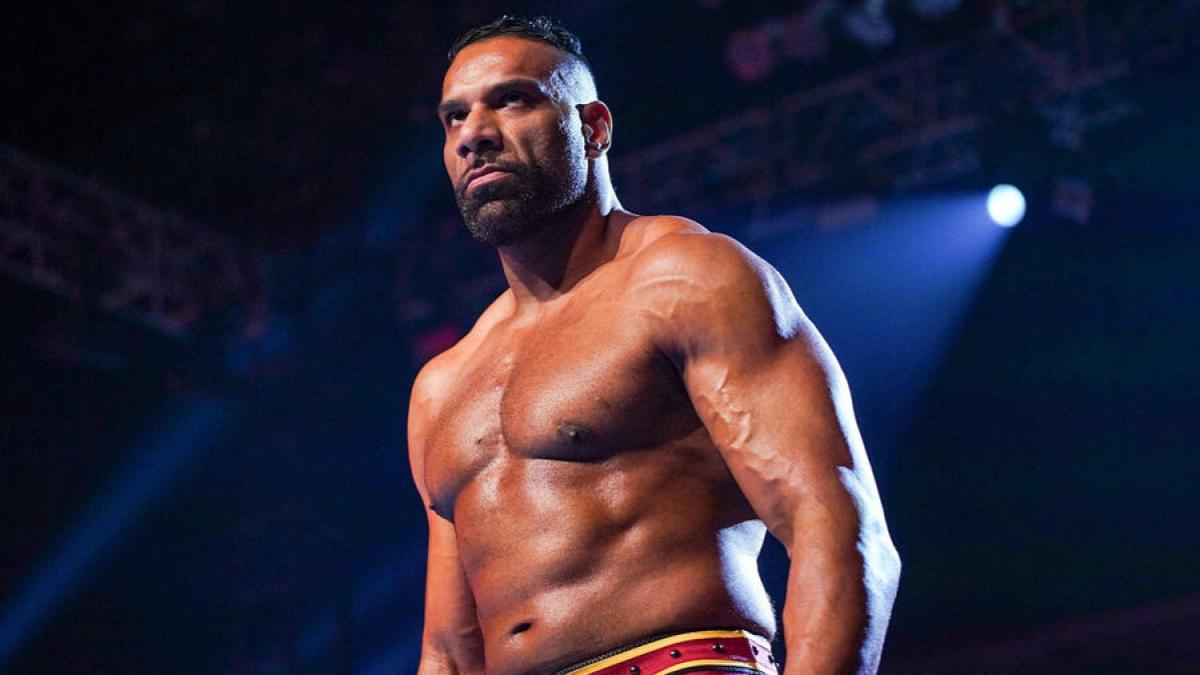
Inside the bizarre rise of Jinder Mahal from near-firing to WWE Champion
The Gorilla Position Ultimatum
Professional wrestling operates in a realm where a millimeter separates a work from a shoot, and a second separates a push from a pink slip. On April 10, 2017, Jinder Mahal stood in the ring on WWE Raw, staring down at a concussed Finn Balor. A forearm strike had landed flush on Balor's temple, sending the recently returned star crashing to the canvas.
Backstage, the atmosphere was frozen. As reports later confirmed, McMahon confronted Mahal in the Gorilla position and delivered a direct threat: "I should fire you."
It was a moment that should have ended Mahal's career in the midcard. Instead, the strange machinery of corporate wrestling took a sudden, inexplicable turn.
Within a week of the incident, Mahal was drafted to SmackDown Live. By the end of the month, he was the number one contender. On May 21, 2017, he stood in the center of the ring at Backlash, holding the WWE Championship above his head after pinning Randy Orton.
The transition from near-termination to the top of the mountain remains one of the most controversial creative decisions in modern wrestling. For years, fans and analysts have debated the true motivation behind this sudden coronation.
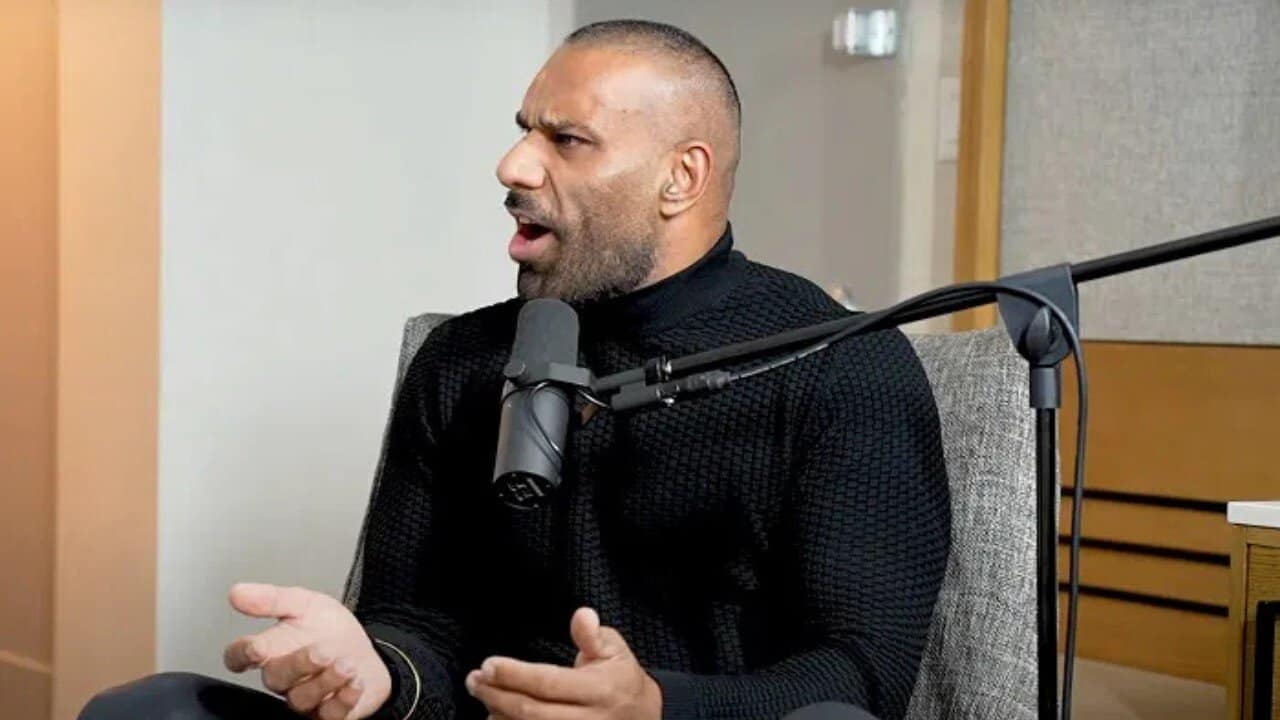
In a recent interview on TMZ Inside The Ring, Mahal pushed back against the long-standing narrative that his reign was merely a marketing stunt. Yet, a tactical look at the numbers, the timing, and the matches themselves reveals a different story.
The Indian Market Debate
Mahal's central argument is that the Indian market was not a temporary variable. "I know there’s a common theme that I was given the WWE Championship for India, but that India market was there when I got released, it was there when I was in 3MB, it’s still there to this day," Mahal stated in his interview. Strictly speaking, he is correct about the existence of the audience.
WWE has enjoyed a massive television viewership in India for decades, pulling in millions of viewers weekly on Sony Ten. However, Jinder's defense ignores the difference between a market's existence and a corporation's active attempt to extract immediate revenue from it.
In the spring of 2017, WWE was actively negotiating its television rights deal in India, a contract worth hundreds of millions of dollars. The company was also preparing for a massive live event tour in New Delhi, scheduled for December of that year. To pretend that crowning an Indo-Canadian champion had nothing to do with these corporate milestones is an exercise in public relations, not analytical reality.
We must look at the timeline of WWE's international expansion projects. The company was pushing localized content harder than ever before, launching the WWE Network in new territories and looking for local anchors. Mahal was the perfect corporate avatar.
He possessed the bilingual promo skills, the heritage, and, most importantly, a physical presentation that Vince McMahon could not ignore. The decision was business, pure and simple, wrapped in the guise of an underdog story.
In a natural continuation of this saga, Mahal has defended his reign by emphasizing the sheer amount of work he put into his physical transformation. There is no denying the effort it took to reshape his body.
He returned to the company looking like a Greek statue, sporting a vascularity and definition that demanded attention. He began wearing custom-tailored suits, arriving at arenas looking like a millionaire champion before the title was ever placed around his waist.
The Illusion of the Workrate
Yet, the tragedy of Jinder Mahal's 170 days as champion was that the workrate never matched the wardrobe. A champion is ultimately judged by what happens between the bells. Mahal's matches were a perfect demonstration of repetitive, formulaic booking.
His primary defensive shield during this run was the pairing of Sunil and Samir Singh, collectively known as the Singh Brothers. What started as a clever heel dynamic quickly devolved into a creative crutch that ruined the flow of every single title defense.
Consider the trilogy of matches against Randy Orton. At Backlash, the match progressed at a glacial pace, designed to hide Mahal's limitations in structuring a main-event singles bout.
The finish relied entirely on the Singh Brothers pulling Orton's legs, allowing Mahal to strike from behind with the Khallas. At Money in the Bank, in Orton's hometown of Saint Louis, the exact same sequence played out. The crowd sat in muted frustration as the formula repeated itself step for step.
The nadir of this feud came at Battleground in the Punjabi Prison match. This match remains one of the worst-reviewed main events in WWE history. The double-layered bamboo structure created a visual nightmare for both the live audience and the television cameras.
The pacing was agonizingly slow, as both men struggled to scale the structure. The final insertion of the Great Khali to secure Jinder's victory was a cheap booking trick that exposed the creative bankruptcy of the entire storyline.
The Nakamura Destruction
If the Orton feud was tedious, the subsequent program with Shinsuke Nakamura was actively damaging. Nakamura had arrived from NXT with an aura of cool charisma and world-class in-ring pedigree. He was primed to be the top babyface on the SmackDown brand.
Instead, he was fed into the Jinder Mahal promotional machine, and his momentum was utterly derailed in the process. At SummerSlam 2017, fans expected Nakamura to take the title and kickstart a new era of workrate-focused television.
Instead, the match lasted just eleven minutes. It was a flat, uninspired contest that ended with yet another distraction from the Singh Brothers and a sudden Khallas. Nakamura looked foolish, unable to overcome two men who weighed a combined three hundred pounds.
The rematch at Hell in a Cell offered no redemption, repeating the same beats to the same disappointing result.
This is where the distinction between Jinder Mahal and Drew McIntyre becomes undeniable. Mahal has frequently compared his journey to McIntyre's, pointing out that both men were released from 3MB and worked their way back.
But McIntyre spent his time away from WWE headlining independent shows across the globe, transforming his in-ring style to match his physical growth. When McIntyre won the title, he was a complete performer.
Mahal, despite his physical transformation, remained the same safe, limited worker he was before his release. McIntyre could carry a twenty-minute main event against any worker on the roster.
Mahal was a relic of the old territory system, a slow-moving heel who relied on heat rather than athletic drama. In an era where fans had grown accustomed to the high-speed workrate of NXT, Jinder's style felt like a throwback.
The crowd did not boo him because he was a great heel. They booed because they were bored.
The Manchester Mercy
The corporate experiment finally reached its breaking point in England. On November 7, 2017, in Manchester, WWE booked AJ Styles to challenge Mahal for the championship.
The match was originally scheduled to be a placeholder defense on SmackDown Live, but the negative reaction to Jinder's run had become too loud to ignore. Brock Lesnar was waiting at Survivor Series, and the prospect of a Lesnar vs. Mahal match was met with universal dread from the wrestling media and fans alike.
When Styles hit the Phenomenal Forearm and pinned Mahal to win the title, the explosion of joy inside the Manchester Arena was a clear indictment of the previous six months. The match itself was Jinder's best performance as champion, precisely because AJ Styles is a genius who could pull a great match out of anyone.
Styles bump-carded for Jinder's power moves, making the champion look like a monster before taking him down in a classic babyface comeback. It was the mercy killing that SmackDown desperately needed.
Mahal's reign did not fail because of his ethnicity or his background. It failed because WWE attempted to book a midcard wrestler as a dominant, main-event attraction without giving him the tools or the matches to justify the spot.
You cannot dress a slow car up like a Ferrari and expect it to win at Monaco. The physical transformation and the custom suits were a great paint job, but the engine under the hood was still built for the undercard.
Looking back at the timeline, the transition from Jinder's near-firing to his championship run is a fascinating study in corporate whim. During his appearance on Inside The Ring, Mahal spoke of his journey as one of "overcoming."
But the real story is how close he came to the exit door before a corporate rights negotiation gave him a golden ticket. It is a reminder that in WWE, the booking sheet is the ultimate authority, and sometimes, even a concussive forearm cannot stop a corporate push whose time has come.
King of Kings: The Official Biography of Triple H
The definitive look at how Paul Levesque transformed the landscape of WWE.
Frequently Asked Questions
When did Jinder Mahal win the WWE Championship?
Why did Vince McMahon threaten to fire Jinder Mahal?
How did Jinder Mahal defend his 2017 WWE Championship reign?
What business goals did WWE have in India in 2017?
Why did WWE choose Jinder Mahal as their corporate avatar?
More Coverage
Top 10: trademark
13 minutes agoSheamus is leaving WWE and we should all be furious about it
an hour agoWWE has figured out the exact formula for Danhausen
an hour ago
CM Punk is champion again, but this Raw title run is a massive gamble
an hour ago
Carny history and corporate drama have wrestling fans in absolute meltdown
2 hours ago
El Hijo del Vikingo undergoes knee surgery, pausing NXT and AAA plans
3 hours agoMore Analysis
Why Jinder Mahal's WWE Championship run was smarter than you remember
19 hours ago
Raj Dhesi's career trajectory shows why third acts rarely work in WWE
4 weeks ago
Raj Dhesi and the reality of the forgotten mid-card grind
3 weeks, 2 days ago
Why Jinder Mahal is right about wrestlers blaming creative for their flops
19 hours ago
Jinder Mahal just admitted what we all knew back in 2017
3 months, 1 week ago