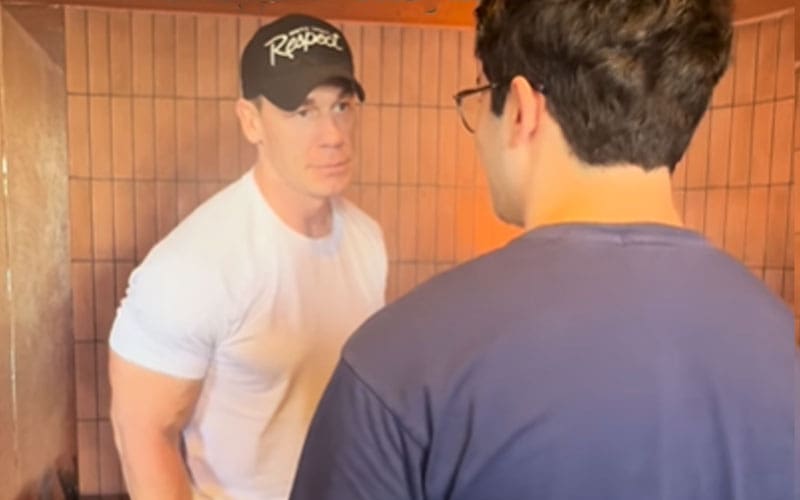
John Cena’s retirement marks the end of the full-time industrial era

The fiscal reality of the modern legend
The business model of professional wrestling is shifting beneath our feet. When a performer of John Cena’s magnitude declares that his return requires an unfathomable financial investment, we are witnessing a correction. The industry is moving away from the era where aging veterans carry the billable hours for weekly television programming.
Cena’s comments underscore a cold, hard truth about the human cost of long-term main event status. We have become accustomed to the false goodbyes and the inevitable, nostalgia-driven returns that plague the industry. Yet, the physical tax is becoming impossible to ignore, which aligns with recent observations regarding Cash Wheeler’s honest assessment of FTR’s future. The grind is no longer sustainable for the workers themselves.
The danger of blurred boundaries
While the financial barrier to entry for veterans is rising, the physical danger for active performers is simultaneously reaching a boiling point. The pseudo-intimacy inherent in modern presentation—driven by social media access and constant character presence—has invited a level of fan interference that compromises the safety of talent. As we have seen with the harassment issues faced by Deonna Purrazzo, the job is now dangerous in ways that a scripted back-body drop never was.
We are watching two distinct problems collide. On one hand, you have the institutional fatigue of veteran stars who have clocked thousands of hours across a 20-year span. On the other, you have a security environment that fails to protect talent from external threats. Neither issue is being solved by current management practices.
Defining the new standard
The reliance on part-time stars is a symptom of failing to build a robust foundation of home-grown main eventers. If you cannot produce a draw without someone who demands an unfathomable financial investment, your creative strategy has stalled. We see this in the reliance on legacy performers to inflate quarter-hour ratings.
There is also a mounting concern regarding the quality of the product when booking rests on returning legends. The recent reliance on past-tense stars to fix current-tense booking problems has resulted in diminished returns. Younger talent rarely gets the rub when the spotlight is perpetually diverted to the exits.
Managing the wear and tear
Physical longevity is the defining metric for the next five years. Wrestlers like Wheeler and Cena have body-mapped the consequences of sustained, high-impact competition. A career that lasts into the mid-forties is no longer a badge of honor; it is a warning. We should be debating the 80 percent reduction in yearly house show dates that could extend these careers, rather than counting the cost of their eventual departure.
The lack of a coherent exit strategy for these top-tier assets is amateurish. Promoters are happy to squeeze the lemon until the skin is thin, only to feign surprise when the performer walks away to preserve what remains of their health. It is a transactional short-term vision that leaves the audience with a hollow, nostalgia-bait product.
Ultimately, the industry must decide if it wants to be a spectacle that burns through human potential or a sport that manages its athletes like human beings. If a wrestler says the price of return is too high, perhaps the answer is not to hunt for more capital, but to change the way the product is manufactured in the first place. The era of the full-time super-worker is ending. Ignoring that reality is a failure of leadership, not a lack of funds.
Read Next
- Why John Cena’s shadow is still a problem for WWE’s future
- Cash Wheeler is finally done with the WWE baggage
- SummerSlam's Minneapolis roof concerns are missing the real data problem
- SummerSlam moving to two nights is a booking disaster in waiting
- 🏆 WrestleMania 41 — Full Coverage Hub
- 👴 John Cena Retirement Tour 2026
WWE Elite Collection Series 100 Action Figure
Poseable, high-detail figures that capture the intensity of the ring.
Frequently Asked Questions
Why are professional wrestlers demanding higher pay as they age?
What safety issues are modern professional wrestlers facing?
How does heavy reliance on returning legends impact younger talent?
What is the primary cause of modern institutional fatigue in wrestling?
How can promoters extend the careers of top-tier wrestling talent?
More Coverage
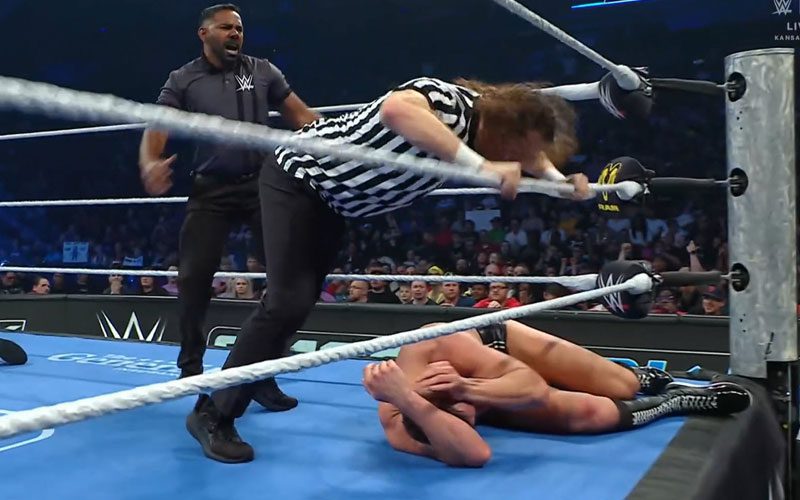
Sami Zayn is trolling GUNTHER and the fans are absolutely losing it
17 minutes ago
Top 10: Defining Wrestling Moments of Mid-2026
17 minutes ago
The road to Night of Champions leads through Liv Morgan's chaos
34 minutes ago
The TNA acquisition rumors are a distraction from real structural problems
34 minutes ago
Cody Rhodes sustains shoulder injury on SmackDown
49 minutes ago
Jey Uso versus Oba Femi is a tactical nightmare for the Bloodline veteran
3 hours agoMore Analysis

John Cena’s 2026 retirement tour is a victory lap we don't deserve
2 months, 4 weeks ago
John Cena is drawing a hard physical line in WWE retirement
3 weeks, 6 days ago
John Cena's post-retirement reality check isn't just nostalgia
1 day, 18 hours ago
John Cena’s final WWE run is hitting a crossroads
2 months ago
The generational shift in professional wrestling is finally here
1 week, 3 days ago