WWE’s scheduling shuffle creates a messy path to Money In The Bank

The operational cost of moving Money In The Bank
WWE recently shifted the staging for the 2026 Money In The Bank premium live event, a move that ripple-effects through the mid-year calendar. When a global promotion adjusts its marquee event dates, it rarely happens in isolation. It forces a compression in the build-up phase, shortening the window for qualifying matches and narrative development.
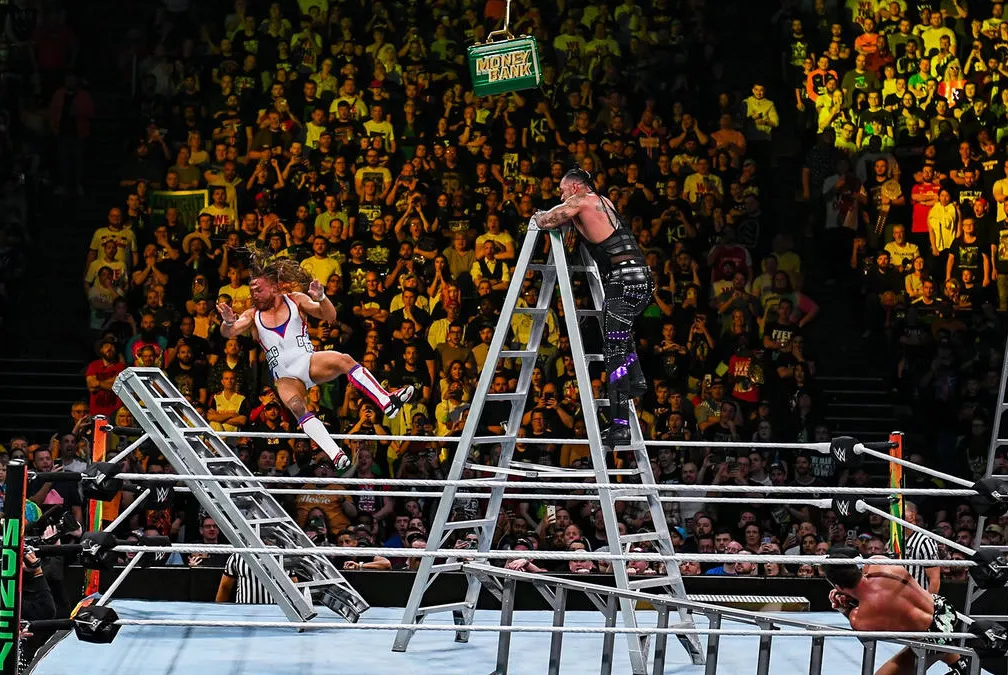
The Women’s Money In The Bank ladder match remains the focal point of this transitional period. Historically, these contests rely on heavy roster saturation to mask the lack of traditional psychology inherent in ladder matches. With potential match spots still in flux, the creative team faces a math problem. How do you establish stakes when the event date itself feels like a moving target?
The thinness of the roster depth
We saw the reality of roster fragility when Tay Melo’s exit highlighted AEW’s thinning roster depth earlier this week. Tony Khan confirmed her departure on the July 24, 2026 media call, closing the book on her five-year run. The point here is obvious: talent attrition is the silent killer of sustained booking. If WWE’s own depth mirrors that instability, the upcoming ladder match risks becoming a showcase of secondary-tier performers rather than a genuine elevated opportunity.
A ladder match needs high-risk specialists to avoid catastrophic pacing issues. If the current participant pool lacks wrestlers accustomed to high-elevation spots, the match will lose viewers early. We have seen celebrity integration attempts like the Brady-WWE crossover fall flat because they prioritize spectacle over the inherent athleticism of the product. The match quality depends on the 15-minute mark; if they cannot maintain tension before the briefcase is even in sight, the event fails.
Tactical concerns for the women's division
Booking the women’s division requires precision. A ladder match is not just a collection of spots. It requires clear spatial awareness and distinct storytelling roles. One wrestler must act as the defensive anchor, preventing others from retreating to the ringside barricades. Another must function as the primary foil—the person who prevents a clean climb.
If the 2026 lineup relies heavily on greener talent, expect botched sequences. The drop-off in output between seasoned veterans like Asuka or Charlotte Flair and the current crop of developmental call-ups is palpable. Watching someone struggle to secure a ladder is fundamentally frustrating. It breaks the suspension of disbelief. It looks like a rehearsal rather than a fight for a world title opportunity.
Realism in these matches is usually dictated by the 12-minute mark, where the exhaustion sets in. If the participants do not sell that fatigue properly, the final minute—the briefcase retrieval—feels unearned. We need to see logical progression: the removal of threats, the use of tables or steel chairs to neutralize space, and the desperate scramble. If they simply trade low-impact strikes between climbing the rungs, the match is a failure of logic.
The creative team needs to decide if this event is about elevating a new star or padding a legacy performer’s trophy case. Trying to do both on a compressed schedule is a recipe for a disjointed program. WWE has the capacity for technical excellence, but it requires giving the performers enough time to breathe between qualifying bouts. Pushing the event date forces the bookers to expedite the process, which usually leads to the overuse of interference-heavy finishes just to justify the lack of a proper buildup.
Read Next
- Top 10: The Most Impactful Pro Wrestling Moments of 2026
- John Cena’s ear-splitting stage directions are a gift to wrestling history
- Top 10: Defining Moments of the 2026 Wrestling Calendar
- John Cena's Hollywood success proves WWE's old main-event booking is officially dead
- 💰 WWE Money in the Bank 2026 — Full Coverage Hub
Frequently Asked Questions
How does shifting the Money In The Bank 2026 date impact the event?
Why is roster depth critical for WWE ladder matches?
What roles are necessary for a successful women's ladder match?
What happens when talent lacks ladder match experience?
How is realistic match pacing maintained in ladder matches?
More Coverage

JBL is wrong to suggest Vince McMahon needs to return
an hour ago
WWE SummerSlam 2026 plans are starting to look bloated
an hour agoNXT viewership numbers show a product stuck in neutral
an hour agoNXT viewership data shows a promotion stuck in a holding pattern
an hour ago
Bayley's vanishing act from SummerSlam isn't just about scheduling
2 hours ago
Cody Rhodes just drew a line in the sand with Tom Brady and I love it
2 hours agoMore Analysis
Why moving Money in the Bank to October completely rewires WWE's title picture
2 weeks, 1 day ago
Why the Money in the Bank format needs a radical overhaul
1 month, 2 weeks ago
Why WWE moving Money in the Bank to October is a massive booking mistake
2 weeks, 1 day ago
Money in the Bank 2026 is a giant gamble on the mid-card
1 week, 5 days agoMoney in the Bank 2026 is a total booking minefield
1 month ago