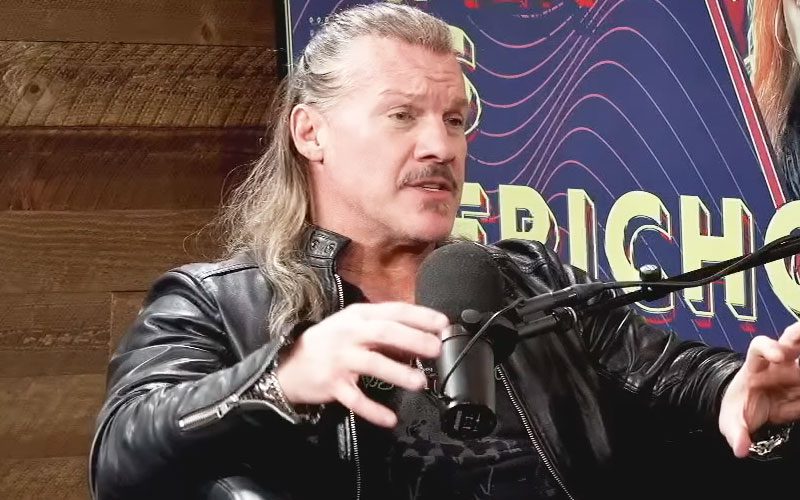
The 2008 gamble defined a career
Chris Jericho is currently on a media tour, reminding us exactly why he remains the loudest voice in the room. He recently hopped on the mic to clarify a point that every aging superstar eventually hits: stop chasing the nostalgia dragon. When talking about his evolution, he keeps circling back to his 2008 heel turn as the turning point that kept him relevant when the Y2J persona started turning into a museum exhibit. It was a massive roll of the dice back then, but he knew if he kept coming out to the same pop-rock theme, he would be a background character by 2010.
He has been very vocal about why he had to ditch the glittery jackets and the catchphrases of old. The man is terrified of becoming a greatest hits compilation. According to recent comments relayed via F4WOnline, that fear of irrelevance is the only thing keeping the gears turning. He knows he can’t out-jump the twenty-somethings on Wednesdays, so he out-acts them.
The preaching to the locker room
Jericho’s latest hobby is giving advice to the younger generation, which, frankly, falls somewhere between mentorship and unsolicited backseat driving. He was recently quoted in WrestleTalk, telling any kid willing to listen that if they are just doing high spots, they are basically gymnastics instructors in trunks. It is the wrestling equivalent of telling your friends that your favorite band is 'too deep' for the radio.
Is he right? Absolutely. Do I want to hear it for the ten-thousandth time? Not really. It is the classic Jericho move: take a concept everyone understands, frame it as a revolutionary realization, and deliver it with enough charisma that you feel bad for rolling your eyes. He’s essentially telling the roster to slow down and sell, a lesson that everyone from Buddy Rogers to John Cena preached until their voices went hoarse.
Lawsuits and the thick skin strategy
The man has also started opening up about the legal side of the business, specifically his time in WWE. He discussed how the company had a very specific, stubborn attitude toward out-of-court settlements. As reported by Ringside News, the mindset was basically to treat every threat like a flea to be flicked off. It is easy to look back with hindsight, but in a litigious world, that 'never back down' policy probably cost them more in stress than it saved in cash.
Jericho brings that same, almost annoying, level of detachment to his current critics. He claims he doesn't waste energy on people who have already decided they hate him. It is a smart stance for a guy who has been on television for three decades, but man, does it create a lonely island of his own making. He’s essentially saying his internal feedback loop is the only one that pays the mortgage.
The biggest flaw in the philosophy
Here is where Jericho loses me. He talks about needing to 'connect with the audience' as if it is a science, yet he often doubles down on gimmicks that feel like he is trying to out-smart, rather than out-perform, the fans. There is a fine line between a performer holding the audience in the palm of their hand and a performer who just likes the sound of their own name echoing off the rafters.
For all his talk about the risks of 2008, he has become a bit of a risk-averse character collector in recent years. He cycles through personas like a teenager trying on outfits for a rave. Sometimes the mask fits, and sometimes it just looks like a guy trying to prove he is still the smartest wrestler in the room at 55 years old. He is the pro-wrestling equivalent of the guy who shows up to the bar with a guitar; he might be talented, but after an hour, you just want to get back to the game.
I don’t wanna be a nostalgia act.
That quote captures the entire struggle. The irony is that the more he talks about not being a nostalgia act, the more he turns himself into one—a living, breathing monument to his own history. He survived the business because he is a chameleon, but even chameleons eventually stop blending in once they get too big for the branch.