The G1 Climax Chicago Bait
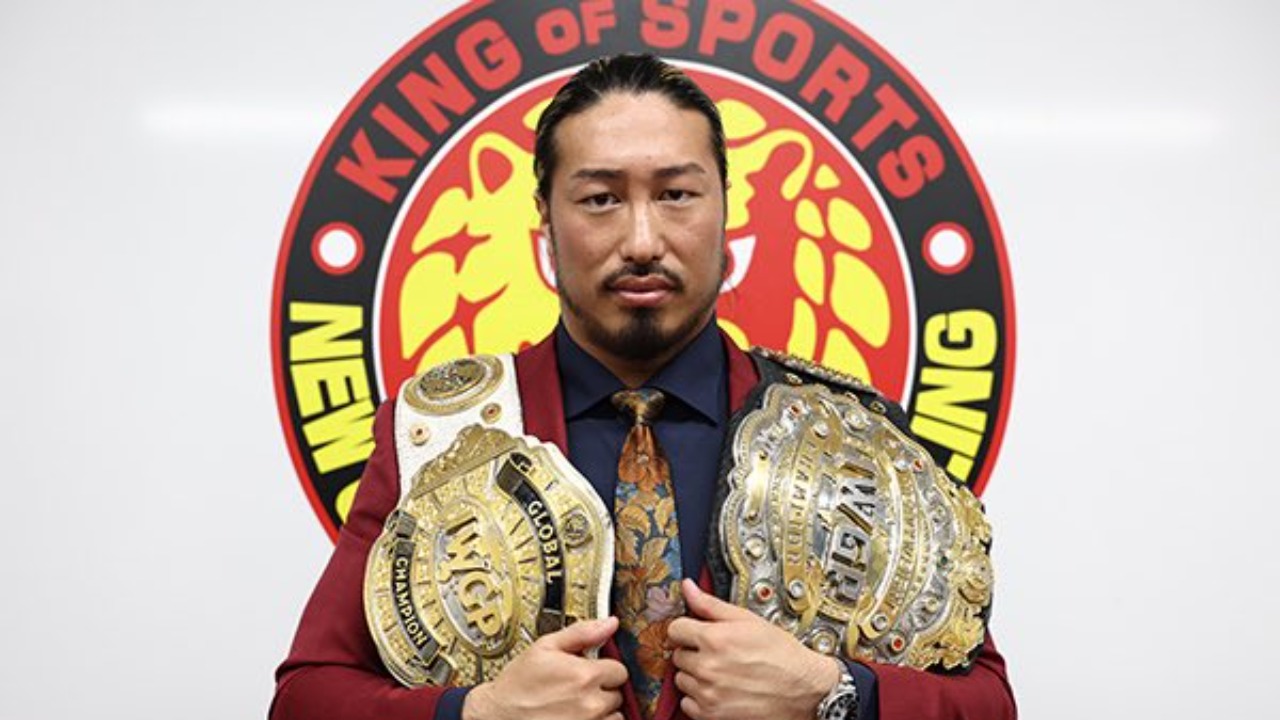
The professional wrestling calendar is built on compromises, but the newest bridge might already be buckling under its own weight. As reported by PWTorch, IWGP Heavyweight Champion Yota Tsuji recently made headlines by inviting AEW owner Tony Khan to the opening night of the G1 Climax 36 in Chicago. This invitation represents a sharp pivot for the champion, who only weeks ago called for a boycott of the Forbidden Door event.
Tsuji complained to Tokyo Sports that the IWGP title was being cheapened by AEW's booking of multi-man matches and random open challenges. He was right to complain. The IWGP title has too often felt like a prop for AEW's mid-carders rather than the most prestigious prize in Japanese wrestling.
Now, the champion has changed his tune. He wants Khan in the front row in Chicago. It is a smart political move that puts the ball firmly in AEW's court.
Fans immediately started dreaming of a full-scale joint tournament between the two promotions. Khan himself fueled these hopes by stating he would love to book such a bracket. However, as Wrestling Inc noted, the hard reality of booking suggests the logistics may be too much to overcome.
Flights, Dates, and Pinfall Politics
Let's look at the numbers. New Japan's premier tournament, the G1 Climax, requires wrestlers to endure a grueling schedule of 19 dates in 28 days. Wrestlers face constant physical toll, flying across Japan for consecutive singles matches that regularly top twenty minutes.
AEW operates on a completely different model. Their talent must be available for live weekly television, specifically Dynamite on Wednesdays and Collision on Saturdays. Pulling top AEW talent out of this rotation for a month of Japanese touring is a logistical nightmare.
A flight from Chicago to Tokyo takes roughly a 13-hour direct flight depending on the wind. That travel time alone destroys a wrestler's ability to work a mid-week television show in America and a weekend tournament show in Osaka. The time zones simply do not align for a dual-roster schedule.
Then comes the issue of booking egos and protected stars. In a round-robin format, wrestlers must lose matches to build suspense and set up block finals. Neither Tony Khan nor the New Japan bookers will allow their top draws to take clean pinfalls on another company's show.
We saw this tension boil over during previous Forbidden Door events. AEW stars walked away with a dominant 7-3 win-loss ratio in singles matches over the last two years. New Japan's management is understandably tired of their roster looking like second-class citizens.
The Control Room Barrier
Beyond the travel schedules, Tony Khan's own booking habits stand in the way of any true collaboration. Commentator Tony Schiavone recently detailed how hands-on Khan is during AEW broadcasts. Schiavone noted that Khan constantly feeds information to the commentary team through their headsets throughout the night.
This style is highly reminiscent of Vince McMahon's notorious control over WWE announcers. While Schiavone spun this as a positive, it highlights a broader truth about how AEW is run. Khan is a detail-oriented micromanager who wants his hands on every aspect of the product.
That level of control does not translate to co-promoting a tournament. You cannot run a joint tournament when one booker insists on controlling the narrative from his headset. New Japan requires long-term booking arcs that stretch across several months of touring.
Khan's booking is highly reactive, often changing hours before Dynamite goes on the air. This clashes directly with the traditional G1 style, which relies on rigid blocks decided months in advance. The booking philosophies are oil and water.
Arn Anderson recently praised Khan's personality, calling him a class act who treats talent very well. F4WOnline reported that this goodwill is valuable for keeping a dressing room happy. However, being a nice boss does not solve the structural gridlock of booking two massive rosters.
Tony Khan is a "class act" who "treats AEW talent really well."
Wrestling promotions often struggle with creative transitions. Schiavone recently praised the creative skills of Road Dogg and Tommy Dreamer as one joined and the other departed TNA, according to Wrestling Inc. These shifts show how fragile creative teams can be even in smaller promotions.
AEW's partnership with New Japan cannot survive on shifting sands. For a joint tournament to work, both companies would need a unified creative committee. With Khan's hands-on approach, he would never cede that booking power to an external group.
The Chicago Compromise
So what will actually happen in Chicago? Yota Tsuji's invitation is not just a polite gesture. It is a calculated challenge designed to force a high-profile match on American soil.
We predict that Tony Khan will accept the invitation and sit front row at the Chicago show. During the event, Yota Tsuji will defend his IWGP Heavyweight Championship against a top AEW challenger. This solves the booking problem by creating a marquee single match rather than a whole tournament.
Who will that opponent be? The obvious choice is Konosuke Takeshita or Will Ospreay. Ospreay has already traded public barbs with Tsuji, calling his boycott stance insecure.
A match between Tsuji and Ospreay in Chicago would easily draw a massive live gate. It gives New Japan the American exposure they want for the G1 Climax. It also allows AEW to showcase their talent without sending them to Japan for a month.
The Negative Reality of Crossover Booking
However, this compromise will leave hardcore fans disappointed. We will get another one-off match that lacks long-term storytelling. The match will likely end in a predictable fashion to protect both champions.
This has been the chief flaw of the AEW-NJPW partnership since its inception. Matches are booked based on dream-card appeal rather than logical narrative progression. It produces great in-ring action but leaves both promotions with flat storylines once the show ends.
For example, when Jon Moxley won the IWGP title, it did little to elevate New Japan's weekly product. It felt like a rental agreement rather than a true partnership. Tsuji's initial frustration with the relationship was entirely justified.
If Tony Khan wants to prove his critics wrong, he must do more than just buy a front-row ticket. He needs to allow AEW talent to lose clean on New Japan shows. Until that happens, any talk of a joint tournament is just marketing noise.
The logistics will remain too difficult to overcome. The physical toll on the wrestlers is too high. The booking egos are too fragile.
We predict a Yota Tsuji victory in Chicago over a top-tier AEW star. The match will likely go to a 22-minute draw or end with a close roll-up. But do not expect a tournament bracket to follow.
The Chicago crowd will go home happy with a great athletic display. The executives will shake hands and talk about the future. But the booking sheets will remain firmly separate.
That is the reality of the modern wrestling business. True cross-promotional tournaments are a relic of the past. Today's promoters are too protective of their investments to take real risks.